
POSTED ON: Feb 04, 2026

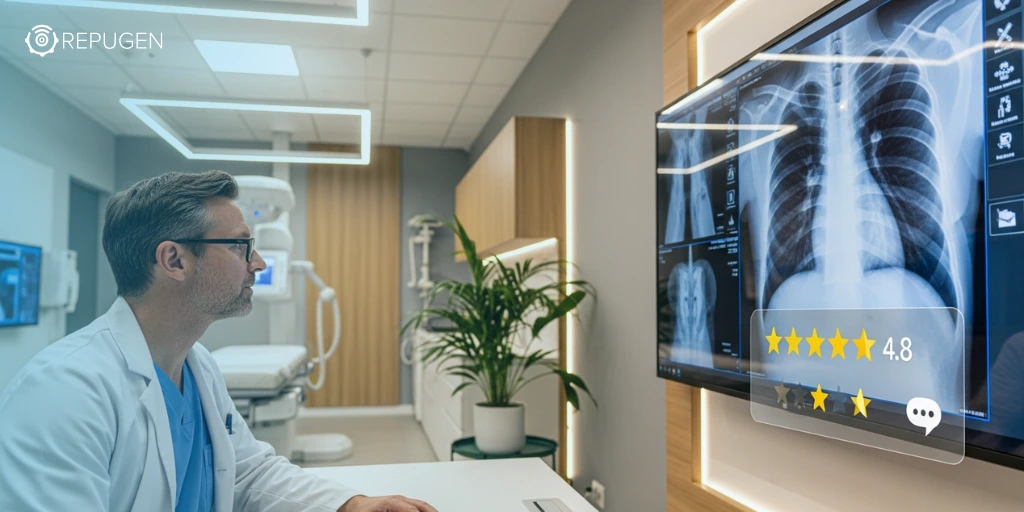
A radiology appointment may last only a few minutes, but the impression it leaves can influence a patient’s trust long after the scan is complete. From how easy it was to schedule an appointment to how clearly instructions were communicated, patients increasingly judge radiology practices on experiences that extend beyond the imaging room. Today, these experiences are shared publicly, shaping perception in ways that practices can no longer afford to ignore.
In This Article
This shift is unfolding alongside rapid growth in the imaging industry itself. The global radiology market was valued at USD 31.86 billion in 2024 and is expected to reach USD 51.55 billion by 2032, underscoring the rising demand for diagnostic services and the growing competition among providers. As radiology services expand in scale and specialization, visibility across search engines, healthcare directories, and AI-driven discovery tools plays a decisive role in how practices are evaluated.
Reviews and patient narratives now shape expectations around efficiency, communication, and professionalism well before a patient arrives. This blog explores how radiology practices can strategically manage their online reputation, focusing on experience consistency, meaningful engagement, and data-backed insights, while navigating a healthcare landscape where perception increasingly guides decision-making.
Research consistently shows that patients actively consult online reviews before booking care. According to RepuGen’s Patient Review Survey 2025, 73% of patients consider online reviews when choosing a healthcare provider. This behavior applies just as strongly to diagnostic and imaging services as it does to primary care or specialty clinics.
In the context of radiology, reputation extends far beyond an average star rating. It reflects patient sentiment on appointment scheduling, wait times, communication clarity, report turnaround, and interactions with front-desk and technical staff. Because radiology encounters often involve limited direct physician interaction, these operational touchpoints carry disproportionate weight in shaping perception.
Patient comments frequently surface themes such as ease of booking, staff courtesy, and how clearly next steps were explained, signals that are often more influential than technical outcomes. CommentWiz helps practices analyze these patterns at scale, transforming individual comments into actionable insights without relying on anecdotal feedback. Importantly, reputation management in radiology focuses on experience and communication, not clinical claims, ensuring trust is built responsibly and compliantly.
Effective reputation management is not a one-time effort. It requires consistent monitoring, thoughtful engagement, and the ability to translate feedback into meaningful improvements. The following strategies outline how radiology practices can build, protect, and leverage their online reputation using data-driven approaches and structured workflows.
Patients share feedback across a wide range of platforms, making comprehensive monitoring essential. 77.78% of patients have used or would use Google to check healthcare provider reviews, positioning Google Business Profile as a critical channel. WebMD (52.47%) and Yelp (29.75%) follow closely, reinforcing the need for multi-platform visibility.
Without centralized monitoring, practices risk missing feedback, inconsistencies in listings, or emerging issues that affect patient trust. RepuGen’s Listing Management feature consolidates reviews and mentions across 60+ healthcare-related sites, enabling teams to maintain accurate information and stay informed without manually tracking each platform.
While reviews heavily influence patient decisions, many patients rarely contribute feedback unless prompted. According to Medical Economics, 84% of patients check reviews before selecting a provider, yet 57% seldom leave reviews themselves. This gap means online reputation may reflect only a small subset of patient experiences.
Proactively encouraging feedback helps create a more balanced and representative online presence. Structured outreach workflows, timed appropriately after visits, can increase review participation without pressuring patients. Platforms like RepuGen help practices request feedback ethically and consistently, ensuring that patient voices are captured while respecting comfort and consent.
Patients place significant trust in providers who acknowledge feedback. 59.48% of patients are more likely to choose a provider who responds to both positive and negative reviews, demonstrating that engagement signals accountability and transparency.
Thoughtful responses reinforce professionalism, address concerns without defensiveness, and show appreciation for positive experiences. RepuGen’s ReplyWize frameworks help radiology practices maintain compliant, HIPAA-aware response workflows, ensuring consistency across teams while safeguarding patient privacy.
Individual reviews offer snapshots, but trends across multiple comments reveal systemic issues. Repeated mentions of scheduling delays, unclear instructions, or long wait times often indicate operational gaps that require attention.
Structured reputation tools analyze sentiment at scale, highlighting recurring themes rather than isolated complaints. CommentWiz, RepuGen’s AI-powered sentiment analysis tool, enables practices to prioritize improvements where they matter most, based on real patient feedback rather than assumptions.
Online reputation influences not only patient choice but also referrals. According to Healthgrades, 19% of physicians report that patient reviews are the most critical factor when referring patients to another physician.
In a healthcare environment where transparency and peer validation matter, radiology practices benefit from maintaining credible, positive online narratives. Reviews act as trust signals not only for patients but also for referring physicians and administrators evaluating service quality and reliability.
As practices grow, manually managing reviews, responses, and insights becomes unsustainable. Centralized technology platforms simplify reputation management by integrating monitoring, sentiment analysis, and workflow coordination into a single system.
RepuGenie functions as a reputation intelligence and AI visibility platform, enabling radiology practices to track trends, maintain consistency, and translate feedback into structured operational improvements, without adding administrative burden.
Measuring success requires more than watching star ratings. Practical indicators include review volume growth, average rating trends, response rates, and shifts in sentiment over time. These metrics provide a clearer picture of whether reputation efforts are driving genuine improvement and patient trust.
Reputation management in radiology is an ongoing strategic priority, not a reactive task. It plays a vital role in building patient trust, supporting referral confidence, and strengthening visibility in an increasingly digital healthcare ecosystem.
Ultimately, reputation is about consistency of experience and clarity of communication, not just numbers on a rating scale. By leveraging RepuGen’s RepuGenie, radiology practices can move from passive review collection to active reputation intelligence, turning patient feedback into meaningful improvement and a trustworthy online presence.

Banner Image Source: Google AI Studio
Recent Posts
0 Comment
Your email address will not be published. Required fields are marked *