POSTED ON: Nov 17, 2026


Most medical practices use patient reviews and surveys, but many expect 1 tool to do the work of both. They ask patients for reviews without learning why some visits fall short, or send surveys whose findings never reach the people responsible for improving the practice.
These tools serve different but connected purposes. Patient reviews build public trust and help prospective patients choose your practice. Patient surveys show you what needs improvement, giving existing patients reasons to stay. Each becomes more useful when its findings inform the other.
That distinction matters when about 89% of patients check online reviews while researching a new provider, according to RepuGen's 2026 Healthcare Behavioral Study.
The goal is not to choose between reviews and surveys. It is to understand what each contributes, how they work together, and how to use both without violating review policies.
Reviews build public trust and visibility, but they come from patients motivated to post. Surveys let you ask every patient specific questions and gather private feedback. Use both: survey every patient, invite every patient to leave a public review regardless of their score, and follow up privately when someone reports a problem. Never send only satisfied patients to review sites. That selectively presents positive feedback, misleads prospective patients, and conflicts with FTC and Google policies.
Reviews and surveys both collect patient feedback, but their value comes from what they help your practice accomplish. Here is how the 2 tools complement each other.
The goal of patient reviews is to win new patients. Reviews are public feedback that prospective patients, Google, and AI tools can see. They influence how people evaluate your practice, how visible your business may be in local search, and how your services are described online.
They serve 3 important purposes.
1. They influence patient choice. BrightLocal's 2026 Local Consumer Review Survey found that 97% of consumers read reviews for local businesses, while 68% said they would only use a business rated 4 stars or higher. For a healthcare practice, that makes the quality and recency of public feedback an important part of how prospective patients assess their options.
2. They support local visibility. Google states that more reviews and positive ratings can help a business's local ranking. Reviews are not the only ranking factor, but they contribute to the public signals Google uses to help people discover nearby businesses.
3. They shape online descriptions. AI tools can summarize what patients write about a practice, including recurring comments about doctors, staff, communication, and wait times.
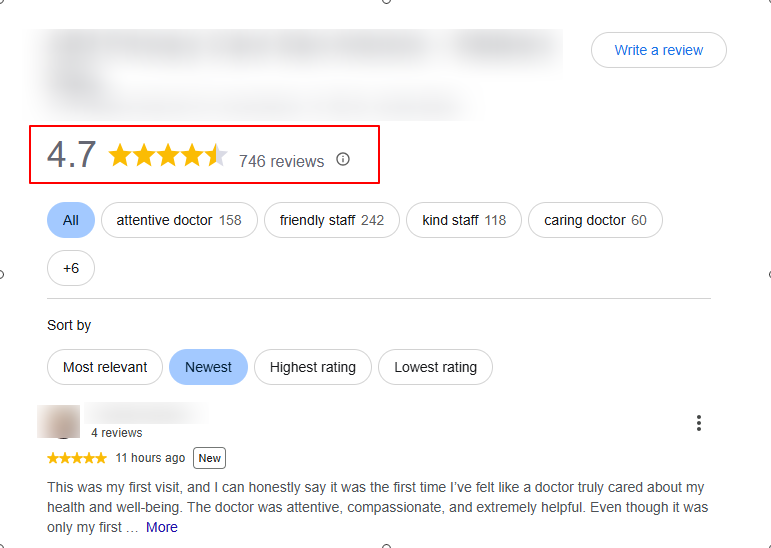
Those descriptions can influence how someone understands your practice before making contact. Read more about the reputation signals AI tools use.
Reviews also reveal issues patients care about that standard surveys may not ask about. A study of 1,000 Google reviews of Canadian hospitals found that 41.5% mentioned wait times, making it the most common theme. By comparison, the HCAHPS hospital survey covers wait times in 2 of its 32 questions.
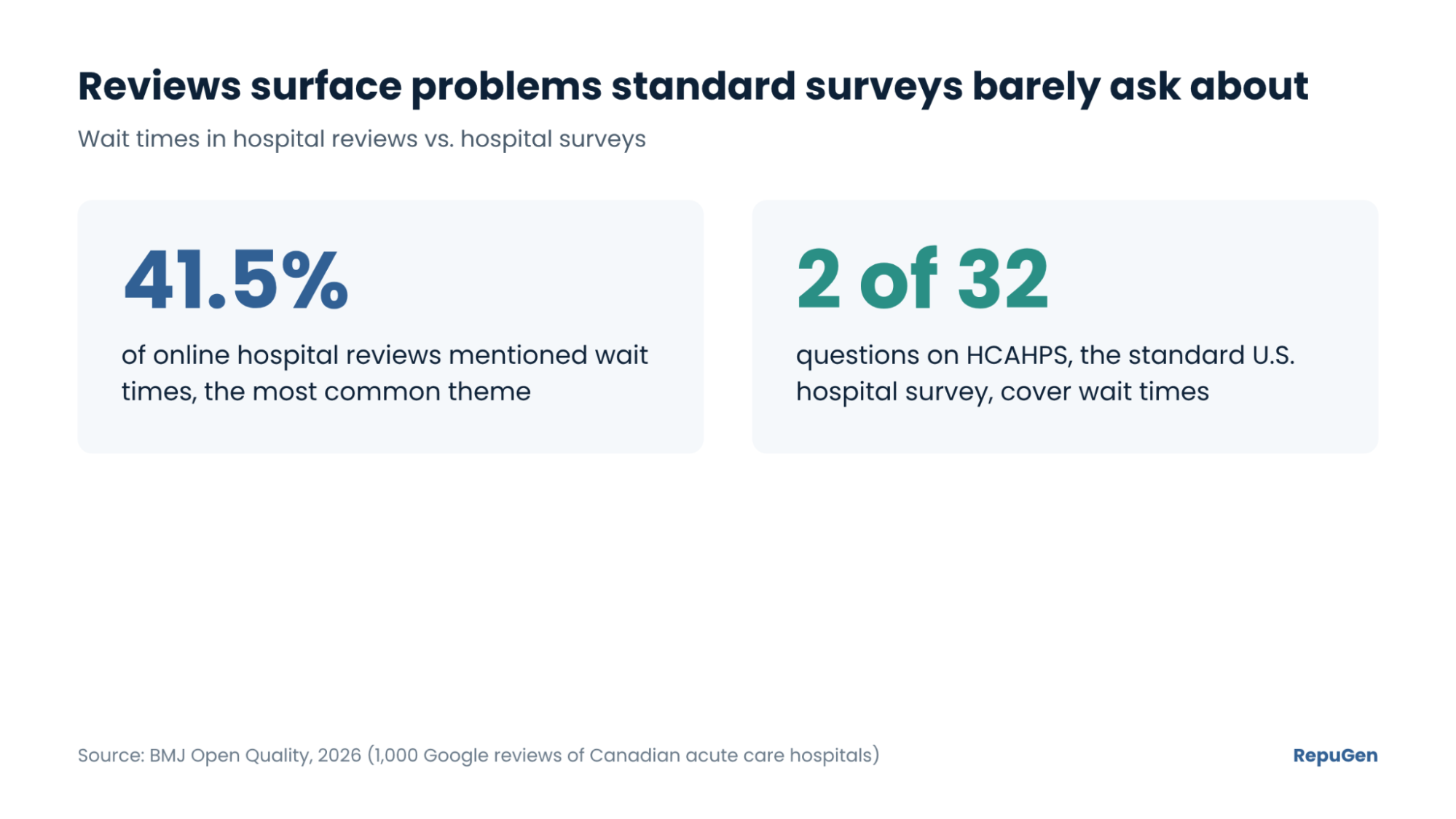
The study's authors concluded that online reviews should supplement surveys, not replace them. That is an important distinction: reviews can reveal what patients choose to discuss publicly, but they do not provide a complete or structured account of what the wider patient population thinks.
The goal of patient surveys is to improve care and keep your patients. A patient satisfaction survey lets you ask specific questions privately and consistently, giving your practice information about wait times, staff interactions, communication, and billing. It also lets your team address concerns before they become public complaints.
Surveys serve 3 purposes.
1. You choose the questions. The CAHPS Clinician & Group Survey, developed by the federal Agency for Healthcare Research and Quality (AHRQ), is a widely recognized standard for measuring patient perspectives in medical practices. It covers areas such as access, provider communication, office staff, and care coordination.
2. You hear from more than the extremes. Reviews come from patients who decide to post publicly. Surveys allow your practice to invite every patient to respond, including people who might never write an online review. The responses are still subject to participation rates, but you can ask consistent questions across a broader group.
3. You can act privately. When a patient reports a poor experience or gives a low score, your team can investigate and follow up directly. A timely response may help resolve an issue before it affects the patient's decision to return. See how a structured service recovery workflow can help practices address concerns.
The honest catch is that traditional surveys often struggle to get responses. The July 2026 CMS HCAHPS public report shows a national average response rate of approximately 23% for hospital surveys. Published research also documents a decline of more than 30 percentage points in survey response rates since 2000.
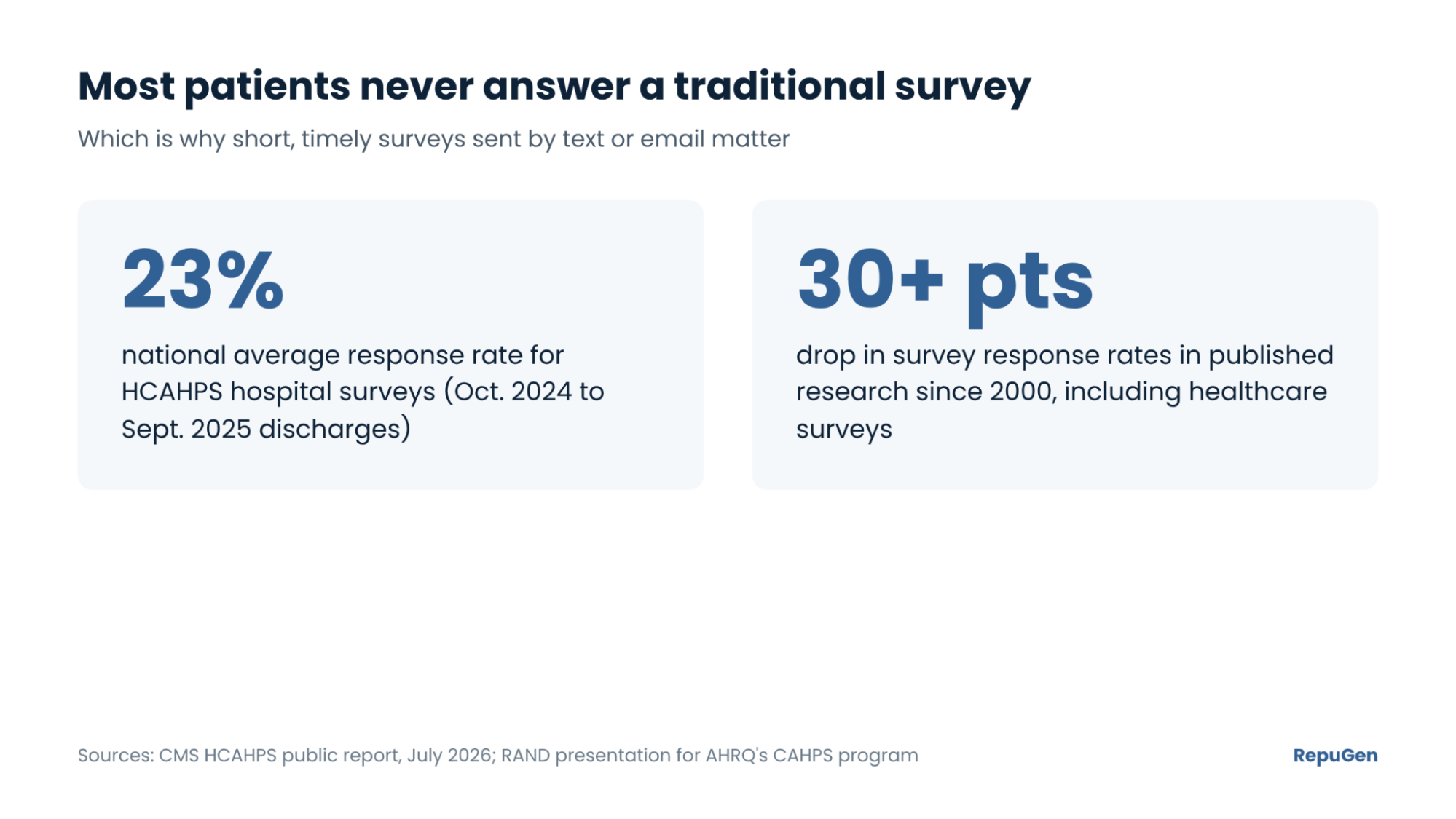
HCAHPS is a hospital survey, so its response rate should be understood as a national hospital benchmark, not a figure that applies directly to every medical practice. Short surveys sent by text or email soon after a visit can make it easier for patients to respond.
Reviews and surveys form a feedback loop. Reviews show you which issues patients raise publicly. Surveys help you understand why those issues happen and how widespread they are. Your practice fixes the underlying problem, and newer reviews can show prospective patients whether the experience has improved. Used alone, each tool leaves a blind spot.
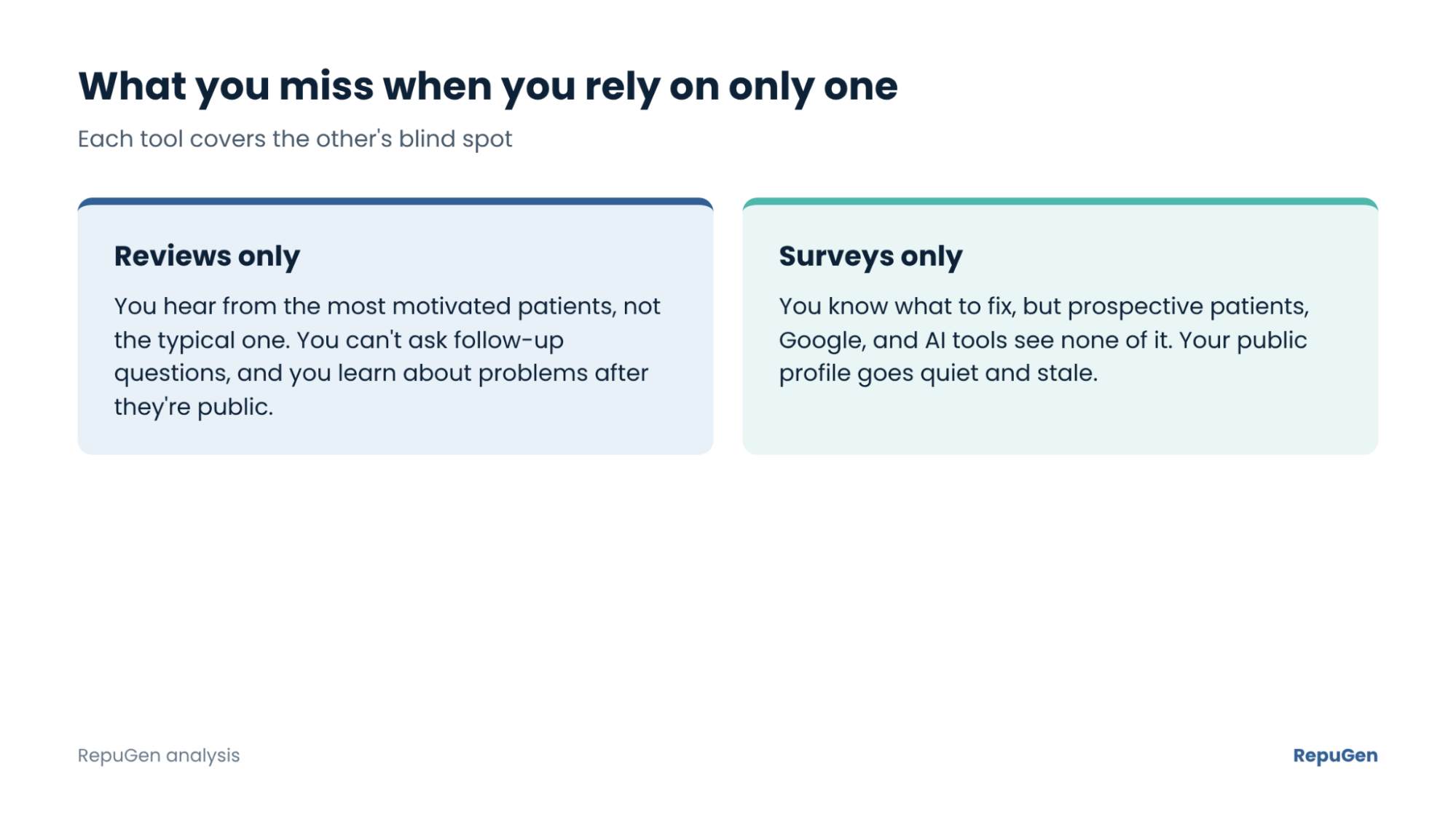
RepuGen's analysis of more than 3.2 million reviews found that patients rated doctors 4.4 out of 5, while wait times averaged 2.9. The pattern was consistently low across specialties. Reviews show that wait times are a concern, but they don't necessarily explain where the delay occurs or what the practice should change.
Consider a hypothetical example. Reviews repeatedly mention long waits. The practice sends a short survey and discovers that the delays happen primarily during check-in on Monday mornings. After reviewing staffing and appointment patterns, the practice adds front-desk coverage for that shift. Over the following months, newer reviews begin mentioning quicker check-ins.
This is an illustration, not a client case. It shows how the 2 tools can inform different stages of the same improvement process.
Reviews tell you where to look. Surveys tell you what to fix. New reviews help show whether the change is visible to patients. That is why a practice needs both.
Survey every patient after the visit, invite every patient to leave a public review regardless of their score, and follow up privately with patients who report concerns. You cannot direct only satisfied patients to review sites or discourage dissatisfied patients from sharing their feedback.
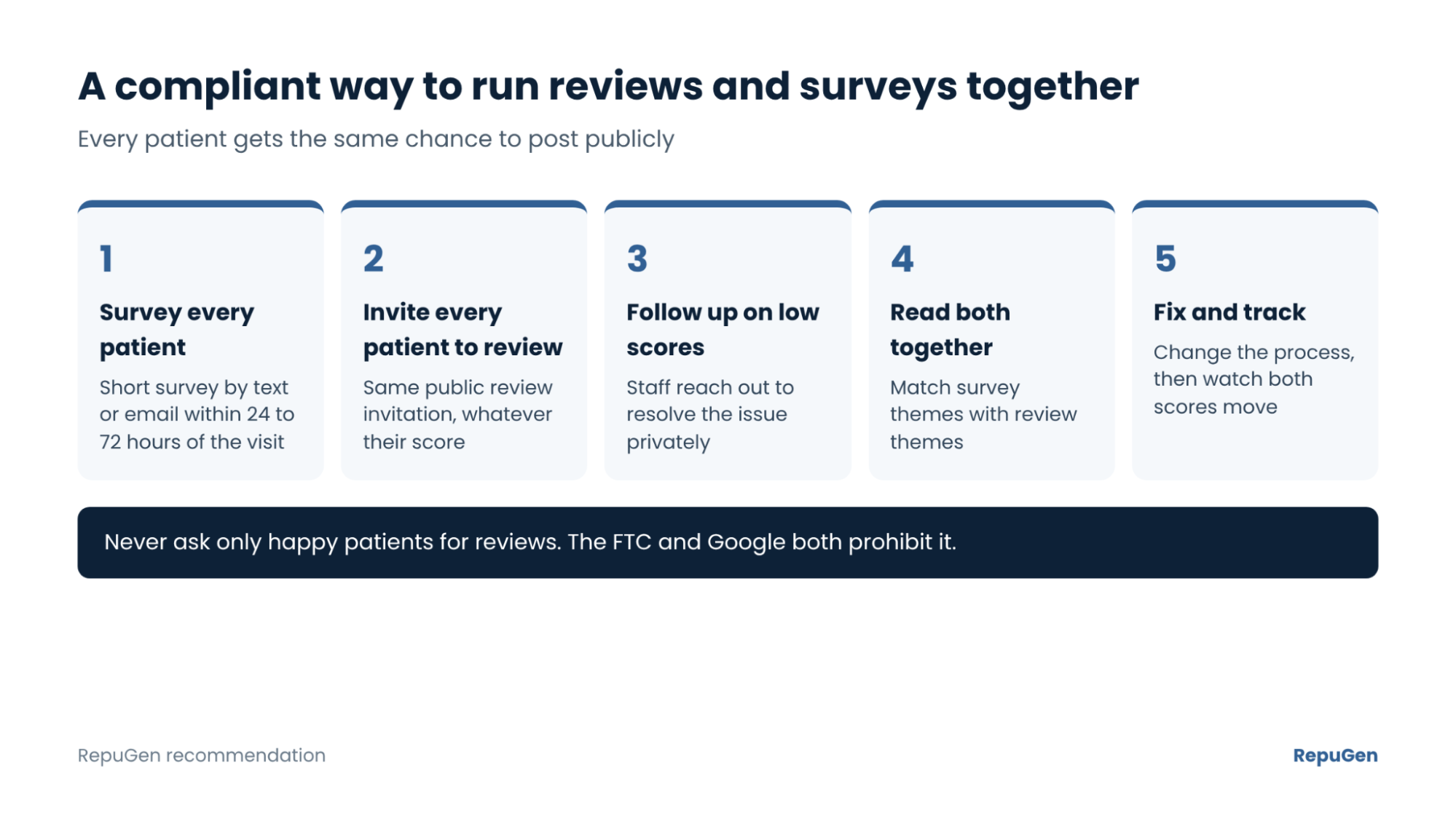
Follow this 5-step process:
Survey every patient. Send a short survey by text or email within 24 to 72 hours of the visit, while the details are still fresh. RepuGen recommends this post-visit window in its 2026 Behavioral Study.
Invite every patient to review. Give all patients the same opportunity to leave a public review, regardless of their survey responses or satisfaction scores.
Follow up on low scores. Have the appropriate staff member contact patients privately to understand their concerns and determine whether service recovery is possible.
Read both together. Compare recurring themes in public reviews with survey responses. Look for issues that appear across both sources.
Fix and track. Make an operational change when the feedback points to a recurring problem, then monitor whether subsequent scores and comments improve.
Review compliance matters. The FTC's guidance for businesses states: “Don’t ask for reviews only from customers you think will leave positive ones.”
Google's policy also states that it does not allow merchants to “selectively solicit positive reviews from customers.”
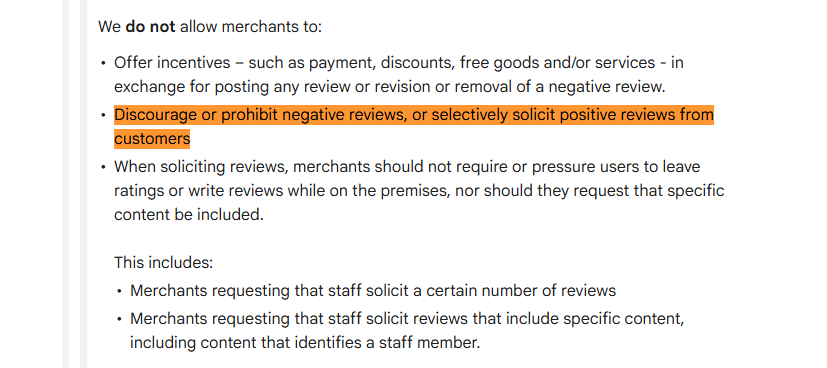
Both policies address the same underlying concern: selectively requesting positive feedback creates a misleading picture for prospective patients. A practice should not use survey scores to decide who receives a review invitation, discourage negative reviews, or route dissatisfied patients away from public review platforms.
For more detail, read RepuGen's guidance on its updated review invitation process and FTC guidelines.
Track review volume, recency, average rating, response rate, and recurring themes on the public side. For surveys, monitor response rate, Net Promoter Score (NPS), question-level scores, and resolved follow-ups. Compare themes across both sources every month to identify where your practice should focus.
When the same issue appears in both sources, such as long wait times, make it your top priority. That overlap gives you a stronger reason to investigate and address the problem.
RepuGen supports both sides of this process through its review collection and patient survey capabilities. RepuGen can send review invitations to every patient by email and text, regardless of their feedback. Multi-Question Surveys collect specific responses, while NPS Reporting helps practices monitor patient loyalty over time.
Grow Reviews: RepuGen's review invitations help practices invite patients to share feedback publicly. The process should give every patient the same opportunity to leave a review.
Multi-Question Surveys: Practices can choose from a bank of 100 predefined questionnaires, add custom questions, schedule survey delivery, and integrate with EMR and practice management systems. Results can be available as soon as the next day, with AI-assisted summaries to help teams review responses. RepuGen clients typically see 20% to 30% response rates, although actual results vary by question set and patient population.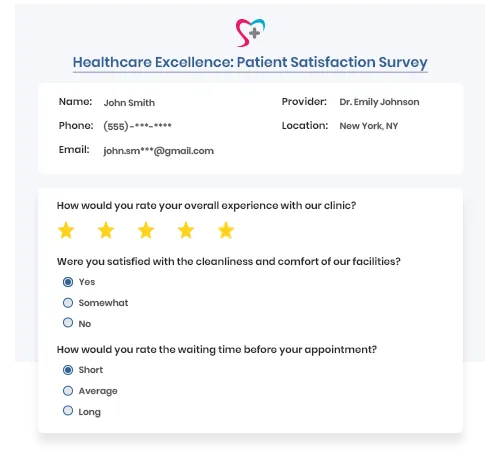
NPS Reporting: RepuGen's [NPS Reporting] helps practices track promoter, passive, and detractor trends over time.
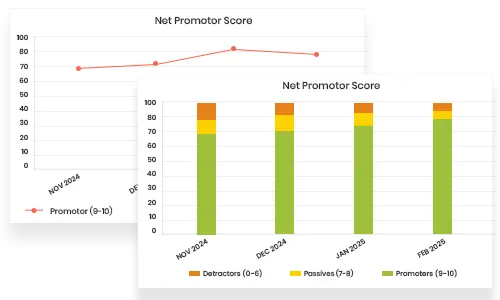
The goal is to make review collection and private feedback part of a consistent practice workflow, not separate activities that happen only when someone remembers.
See how RepuGen can support your review and survey processes: https://www.repugen.com/schedule-a-live-demo
They serve different goals: reviews build public trust and visibility that bring in new patients. Surveys show you, privately, what to improve so those patients stay. Together, surveys help you fix what reviews reveal, and new reviews show the improvement.
No. The FTC advises against asking only customers likely to leave positive reviews, and Google prohibits selectively soliciting positive reviews. Invite every patient, regardless of their feedback, and follow up privately with anyone who reports a problem.
Within 24 to 72 hours of the visit, while the details are still fresh. Keep it short and send it by text or email to make responding convenient. Use the same core questions consistently so your practice can compare results over time.
No. Survey results stay private, so prospective patients and Google never see them. Reviews turn a patient's opinion into public feedback that others can consider when choosing a provider. Both are needed to understand and communicate care quality.
Reviews and surveys are not competing priorities. Reviews tell prospective patients what others say about your practice, while surveys show your team what to improve. Practices that use both, invite every patient to participate, and act on the feedback can build a public reputation that more accurately reflects the care they deliver.

Banner Image Source: ChatGPT
Recent Posts
0 Comment
Your email address will not be published. Required fields are marked *