
POSTED ON: Jun 16, 2026

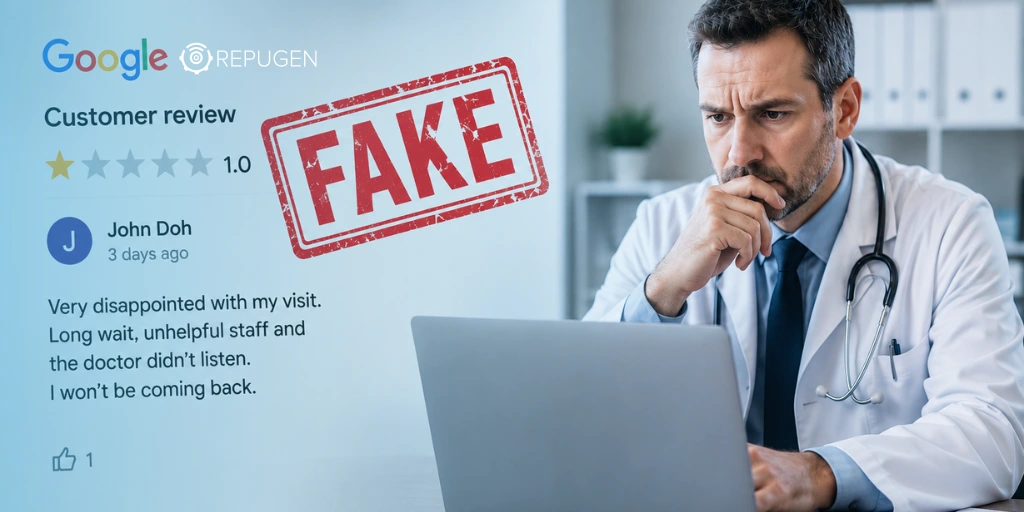
A prospective patient searches for a local clinic, sees a 4.8-star rating on Google, reads several glowing reviews, and schedules an appointment. Everything about the practice appears trustworthy. The ratings are strong. The feedback is overwhelmingly positive. The decision feels easy.
Later, that patient discovers many of those reviews were fabricated.
That scenario is no longer a hypothetical concern. It reflects a growing challenge across healthcare and countless other industries where online reviews influence purchasing and service decisions. The difference is that healthcare decisions carry significantly higher stakes. Patients are not choosing a restaurant, a hotel, or a retail product. They are choosing who will diagnose illnesses, manage chronic conditions, and guide some of the most important decisions of their lives.
At the same time, patient reviews have become one of the most influential trust signals available online. A 2025 BrightLocal survey found that 49% of consumers believe businesses should be responsible for identifying fake reviews, yet many healthcare organizations still lack a formal process for monitoring review authenticity.
The challenge is becoming harder to ignore. Patients increasingly depend on reviews to make healthcare decisions, while advances in automation and AI have made it easier than ever to create convincing but misleading content at scale.
Healthcare providers now face a difficult reality: reviews matter more than ever, but confidence in online reviews is becoming harder to maintain.
Understanding the scale of the fake review problem, the regulatory changes surrounding review practices, and the steps providers can take to protect their reputations is now essential to healthcare reputation management.
Healthcare decisions are fundamentally different from most consumer decisions because the product is trust.
Patients rarely have the clinical expertise necessary to independently evaluate a physician's qualifications, diagnostic skills, or treatment outcomes before becoming a patient. Instead, they rely on signals that help reduce uncertainty. Reviews have become one of the most important of those signals.
According to RepuGen's Patient Review Behavioral Study, 89% of patients check online reviews when researching a new healthcare provider.
That statistic alone illustrates how deeply online reviews have become embedded in the patient journey. For many patients, the review process begins before they visit a website, call an office, or verify insurance coverage.
Reviews serve as a form of borrowed trust.
Patients often use reviews to answer questions they cannot easily answer elsewhere:
These questions influence perception long before a patient experiences care firsthand.
Research published in the Journal of Medical Internet Research found that physician-rating websites directly influence patient choice, with higher review volume correlating with more favorable patient attitudes toward providers. The study reinforces an important point: reviews do not simply reflect reputation. They actively shape it.
The impact extends beyond patient acquisition.
Healthgrades research found that patient reviews are among the most influential factors physicians consider when making referrals. In other words, online reputation affects both consumer trust and professional trust. A provider's review profile can influence not only whether patients choose them, but also whether other physicians feel comfortable recommending them.
This creates a multiplier effect.
Positive reviews can strengthen patient confidence, increase referral opportunities, and improve visibility. Fake reviews, whether positive or negative, can distort those signals and undermine the trust patients and providers depend on to make informed decisions.
That is what makes fake reviews particularly dangerous in healthcare. They do not simply influence purchasing behavior. They influence care decisions.
Google removed more than 240 million fake or policy-violating reviews in 2024 alone.
That number makes one thing clear: fake reviews are not isolated incidents. They are a large-scale problem affecting virtually every online review ecosystem.
Healthcare is no exception.
Unlike retail businesses, healthcare providers operate in an environment where inaccurate information can influence decisions with clinical consequences. Patients may choose providers based on reviews they believe are authentic when, in reality, those reviews may have been manipulated.
The problem takes two primary forms.
Some organizations attempt to inflate their reputations through fabricated positive reviews.
Examples include:
These reviews create a misleading impression of quality and can unfairly influence patient decisions.
The opposite problem is equally damaging.
Fake negative reviews may originate from:
A handful of malicious reviews can create uncertainty for prospective patients, particularly when a provider has relatively few reviews overall.
The broader consequence is erosion of trust.
BrightLocal's annual research found that consumer trust in online reviews continues to decline. In 2024, 50% of consumers said they trusted online reviews as much as personal recommendations from friends and family. By 2025, that figure had fallen to 42%.
Patients are becoming more skeptical because they increasingly recognize that not every review can be taken at face value.
The FTC has also identified AI-generated reviews as an emerging threat. As generative AI tools become more accessible, creating realistic but completely fabricated reviews requires little effort or expertise.
The result is a growing challenge for both patients and providers: distinguishing authentic experiences from manufactured ones.
| Authentic Review Signals | Potential Fake Review Signals |
|---|---|
| Mentions specific aspects of care | Generic praise with little detail |
| Reflects realistic patient experiences | Extremely positive or negative without context |
| Appears naturally over time | Large clusters are posted within a short period |
| Written by accounts with a review history | Posted by newly created accounts |
| Includes balanced observations | Uses repetitive or templated language |
While no single signal confirms a review is fake, patterns often reveal more than individual reviews do.
On October 21, 2024, the Federal Trade Commission's final Trade Regulation Rule on the Use of Consumer Reviews and Testimonials officially went into effect.
The rule represents the most significant federal action to date targeting deceptive review practices.
In simple terms, the FTC has made it clear that fake reviews are no longer merely unethical. They are a regulatory issue with real legal consequences.
The rule prohibits businesses from:
The potential penalties are substantial. Violations can result in civil penalties of up to $51,744 per violation.
That exposure can become significant very quickly for organizations engaging in widespread review manipulation.
| Acceptable Practice | Risky or Prohibited Practice |
|---|---|
| Requesting reviews from all patients equally | Paying for positive reviews |
| Encouraging honest feedback | Conditioning rewards on positive sentiment |
| Responding professionally to reviews | Creating reviews on behalf of patients |
| Using compliant review collection systems | Purchasing reviews from third parties |
| Disclosing employee relationships where required | Posting undisclosed insider reviews |
Healthcare providers face an additional layer of complexity because FTC compliance does not replace HIPAA obligations.
Many providers assume that responding to reviews is risky due to privacy regulations. While caution is warranted, HIPAA does not prohibit providers from responding altogether.
Instead, it requires that providers avoid confirming a patient relationship or disclosing protected health information.
This means healthcare organizations must navigate two separate but overlapping responsibilities:
FTC Chair Lina M. Khan summarized the issue by stating that fake reviews pollute the marketplace and divert business from honest competitors.
In healthcare, that diversion can affect not only market competition but also patient trust and decision-making.
There is no single solution to fake reviews.
However, five practices significantly reduce risk while strengthening overall reputation management efforts.
Most healthcare organizations monitor reviews reactively.
A more effective approach is to conduct routine audits across major platforms.
Review audits should focus on:
A monthly review audit often identifies concerns before they escalate.
Every major platform provides mechanisms for reporting fraudulent reviews.
These include:
Providers should document:
Not every review will be removed immediately. Documentation creates accountability and helps organizations track outcomes over time.
Responding to reviews serves multiple purposes.
It demonstrates engagement. It reassures prospective patients. It also helps create a more balanced and authentic online presence.
BrightLocal's research found that 28% of consumers are more willing to leave a review when asked. RepuGen's Patient Review Survey found that 59.48% of patients trust providers more when they respond to reviews.
Response behavior signals that the practice actively listens to patient feedback.
When responses are absent, patients often assume reviews are ignored.
One of the strongest defenses against fake reviews is volume.
Consider two providers:
| Provider A | Provider B |
|---|---|
| 12 reviews | 300 reviews |
| Receives 2 fake negative reviews | Receives 2 fake negative reviews |
| Significant rating impact | Minimal rating impact |
| Trust affected immediately | Trust remains stable |
The larger the volume of authentic reviews, the harder it becomes for isolated fake reviews to distort overall perception.
Providers should focus on generating reviews consistently rather than relying on occasional review campaigns.
Many healthcare organizations struggle because staff are uncertain how to respond appropriately.
A documented response policy should define:
The goal is consistency.
When review management becomes a structured operational process rather than an ad hoc activity, organizations are better equipped to handle both legitimate and fraudulent reviews.
Healthcare organizations often view reviews through a marketing lens.
That perspective is understandable, but incomplete.
Trust influences far more than patient acquisition.
Patients who trust their providers are more likely to:
Patients who lack trust often behave differently.
They may:
A 2024 NIH-published study using the National Cancer Institute's Health Information National Trends Survey found that lower trust in the healthcare system directly disrupts patient-provider interactions.
This is where the fake-review conversation becomes larger than just reputation management.
Fake reviews distort the signals patients use to evaluate trustworthiness. They influence perception before any clinical interaction occurs.
Viewed through that lens, managing fake reviews is not simply about protecting ratings or maintaining search visibility. It is about protecting the integrity of the information patients use
to make healthcare decisions.
Trust is not a marketing asset.
It is a clinical asset.
And when trust is compromised, patient care can be affected long before a patient enters the exam room.
Healthcare providers cannot eliminate fake reviews. What they can do is create systems that identify suspicious activity, encourage authentic patient feedback, maintain regulatory compliance, and reinforce the credibility of their online presence.
In a healthcare environment increasingly shaped by digital research and online reputation, those efforts are becoming essential to both patient trust and long-term practice success.

Banner Image Source: ChatGPT
Recent Posts
0 Comment
Your email address will not be published. Required fields are marked *