


Introduction
As the integration of artificial intelligence (AI) tools continues to reshape digital healthcare discovery, this survey examines how U.S. patients are adopting and trusting AI-powered search behaviors when researching healthcare providers.
The study, conducted among 619 respondents, explores AI adoption patterns, trust levels, usage motivations, and demographic differences, offering a data-backed lens into how technology influences patient decision-making.
Tap play to enjoy this article, and don’t forget to subscribe to RepuGen on Spotify for more insightful podcasts!
Overall Findings Summary
From Curiosity to Confidence - AI Becomes an Expected Partner in Healthcare Search (2025 Reality Check)
AI is no longer an experimental add-on in healthcare discovery; it’s becoming an expected part of how patients search for and evaluate providers. With 51% of patients adopting new search tools, such as AI, for healthcare research, while 46.5% of patients still rely on traditional search methods, and 39.7% now use AI directly, either exclusively (14.7%) or alongside traditional search (25%), showing that adoption has clearly moved beyond early curiosity. Trust in AI-generated results is also maturing, with 52.8% of users mostly or completely trusting these outputs and 55.3% comfortable with AI ranking providers. Accuracy (37.8%) and clarity (24.8%) remain the top trust drivers, confirming that transparency and credible data are what make patients confident in AI-assisted decisions.
(A) Key Behavioral Trends
| Insight Area | Data-Backed Findings | Interpretation |
|---|---|---|
| Adoption of AI Tools | 51.0% of respondents reported adopting new internet-based tools or behaviors, such as AI tools, review sites, or other online search methods. | This indicates a broader shift in how patients seek healthcare information online. While the question includes AI tools as one example, the finding reflects wider digital adoption trends rather than AI-specific behavior. |
| Search Method Evolution | While 46.5% still rely solely on traditional search engines, 39.7% now use either AI tools or a mix of both AI and traditional search, showing meaningful diversification in research habits. | Reflects a transitional phase where patients are increasingly blending AI-driven and traditional search approaches, signaling an evolution toward hybrid research behaviors and growing openness to AI assistance in healthcare decisions. |
| Usage Frequency | Among AI users, the average AI usage = 56.8% of their total searches. | Patients are not merely experimenting; they're using AI for over half of their provider research activities. |
| Comparison with Traditional Search | 36.3% find AI-generated results more helpful than Google/Bing, while 39.5% say "about the same." | Suggests AI is nearly at parity with traditional search engines in perceived utility — a strong signal of maturing trust. |
| Trust Levels | About 52.8% "mostly/completely trust" AI-generated results; 55.3% would trust AI to rank doctors. | While cautious optimism exists, transparency and accuracy remain key trust drivers. |
| Future Use Intention | 45.9% are likely or very likely to use AI tools in the future. | Patient reliance on AI is set to grow, signaling a major opportunity for digital-health engagement strategies. |
(B) Trust and Decision Dynamics
| Factor Influencing Trust in AI Results | Ranked #1 (%) | Weighted Average (1-6) | Key Insight |
|---|---|---|---|
| Getting accurate and relevant provider information | 37.80% | 4.36 | Core determinant of trust, factual precision is paramount when patients evaluate AI credibility. |
| Receiving clear, easy-to-understand explanations | 24.80% | 4.14 | Clarity enhances comfort and confidence; patients prefer straightforward, plain-language AI responses. |
| Saving time in finding what I need | 15.85% | 3.88 | Perceived efficiency adds value, showing AI's appeal as a convenience-driven support tool. |
| Getting personalized or tailored recommendations | 7.72% | 3.05 | Customization is appreciated but not yet a primary trust factor; accuracy still outweighs personalization. |
| Being able to compare options easily | 7.32% | 2.90 | Comparison features have a moderate influence; patients care more about reliability than choice variety. |
| Having confidence in the tool's recommendations | 6.50% | 2.67 | "Confidence" emerges as an outcome, not a driver; trust must first be earned through accuracy and transparency. |
Interpretation Patients’ trust in AI for healthcare research depends most on accuracy (37.8%) and clarity (24.8%). Efficiency and personalization play supporting roles, suggesting patients view AI as an informational tool rather than a decision-maker.
Insight: Trust in AI is conditional. Verified data, transparent explanations, and explainable recommendations are essential to bridge human trust with machine intelligence.
(C) Demographic Insights: Who’s Driving AI Adoption?
| Demographic | Leading Segments | Interpretation |
|---|---|---|
| Age | 30-44 (40.06%) and >60 (24.39%) | AI adoption in healthcare search is led by digitally adept mid-career adults (30–44), with notable engagement from older adults (>60), signaling growing cross-generational openness to AI tools. |
| Gender | Female (58.16%) | Women lead AI-driven healthcare research, consistent with broader patterns where women are primary healthcare decision-makers in households. |
| Income | Middle-income ($25K-$99K) = 47.17% | The core AI user base is affordability-conscious yet tech-comfortable, seeking efficient, trustworthy solutions that balance cost and convenience in healthcare choices. |
| Region | Pacific (28.29%), South Atlantic (16.94%), Mid-Atlantic (15.30%) | Tech-forward, urban coastal regions dominate AI healthcare usage, reflecting stronger digital infrastructure and early adoption tendencies in these areas. |
(D) Cross-Trend Visualization (At a Glance)
| Dimension | Trend | Direction | Interpretation |
|---|---|---|---|
| Adoption Rate | 39.7% of searches use AI tools to some degree | Rising | AI is now a meaningful part of patients' real search behavior, signaling mainstream integration. |
| Trust Level of AI-Generated Results | 52.84% trust AI outputs | Moderate Growth | Growing but still dependent on validation. |
| Comparative Helpfulness | 36.33% rate AI as "more helpful" than Google | Competitive | AI is nearing traditional search in perceived usefulness. |
| Future Usage Intent | 45.88% likely to use AI in the future | Sustained Growth | Indicates durable behavioral change. |
Q1: How Many Patients Are Using AI to Research Providers? (619 respondents)
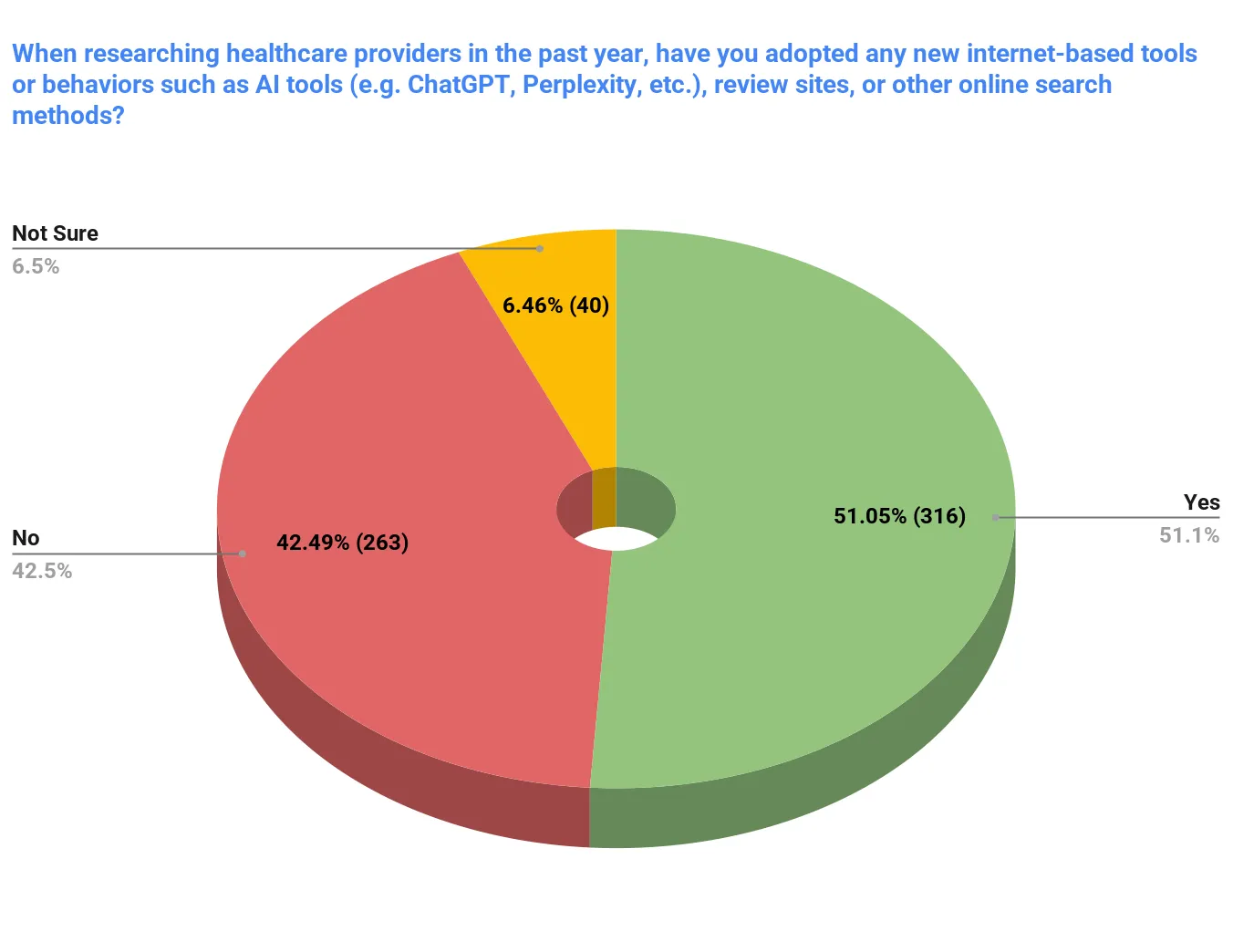
Over half of patients (51%) now use AI or digital tools when researching healthcare providers, showing that AI-assisted decision-making has firmly entered the patient journey. Traditional habits remain meaningful, with 42% still not adopting new tools, but the transition toward tech-driven research is well underway.
Patients often also use AI without realizing it, through indirect exposure in search engines and platforms. Providers must ensure their online information is accurate and consistent so AI systems can return correct, trustworthy results.
Q2: How Patients Search for Providers Today? (619 respondents)
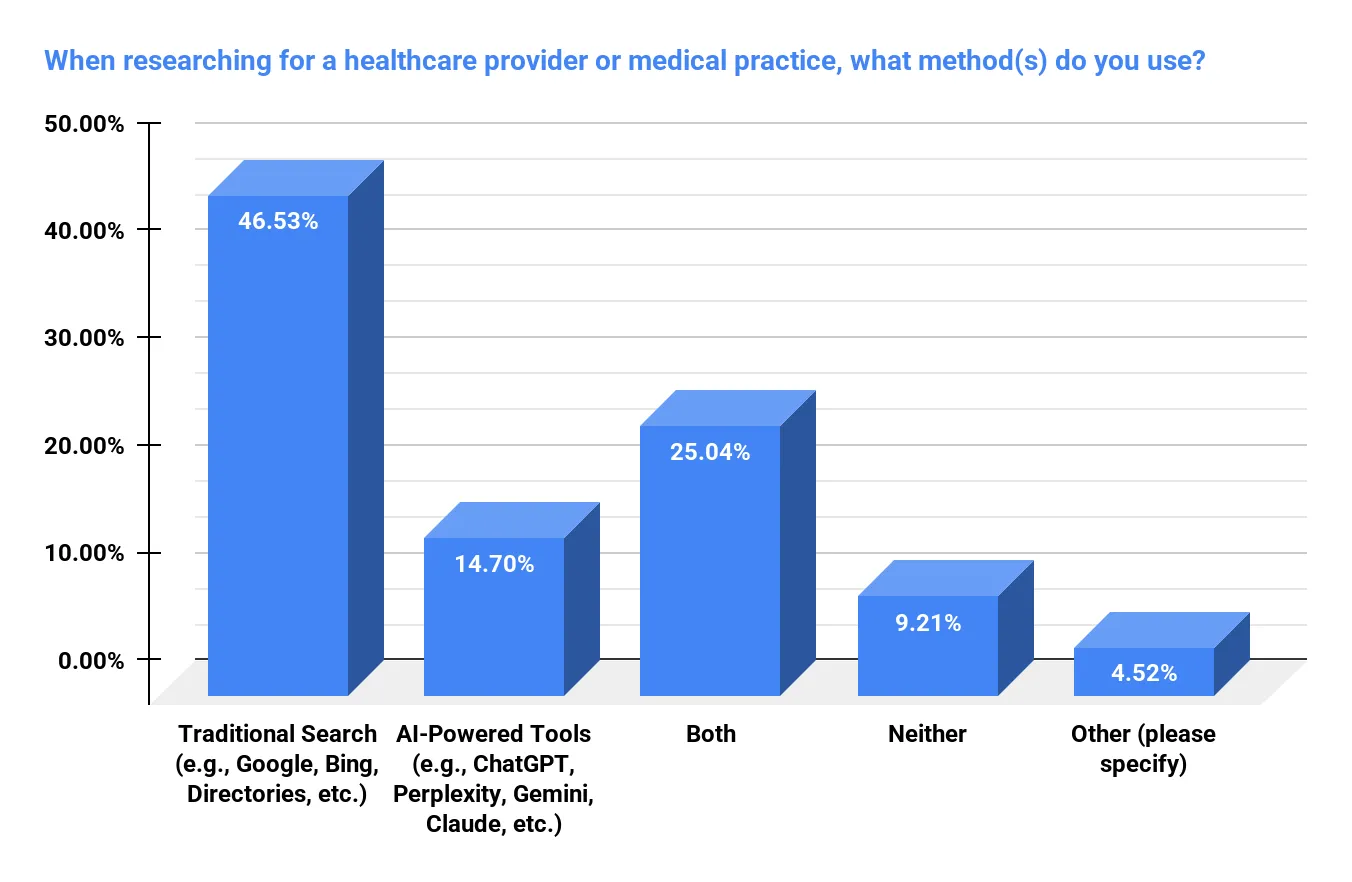
Traditional search remains the most common method for finding healthcare providers (47%), but AI-only and hybrid search behaviors now represent 40% of patient activity. One in four patients blends AI with conventional search, showing that research is rarely linear and often involves multiple digital touchpoints. A smaller portion (9%) still relies on offline sources like word-of-mouth. Providers need strong visibility across both traditional search engines and AI-driven tools to meet patients wherever they search.
Q3: How Often Patients Rely on AI for Provider Research? (246 respondents)
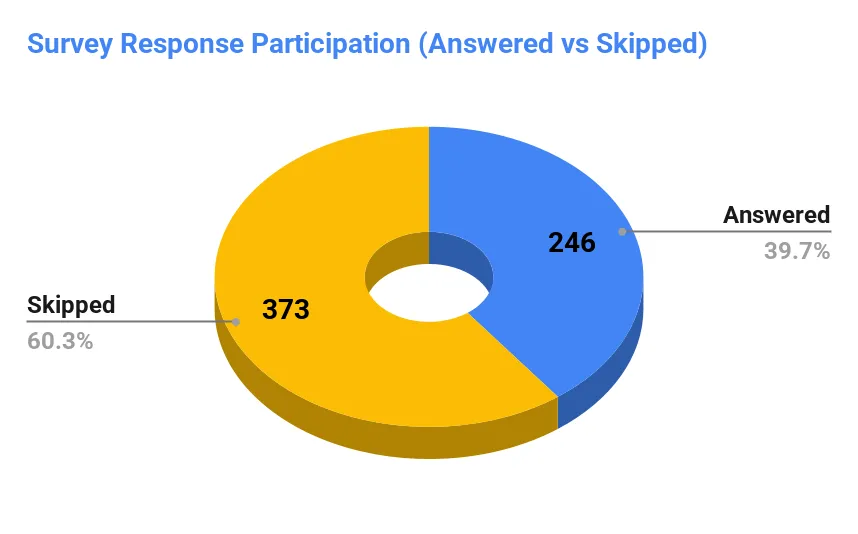
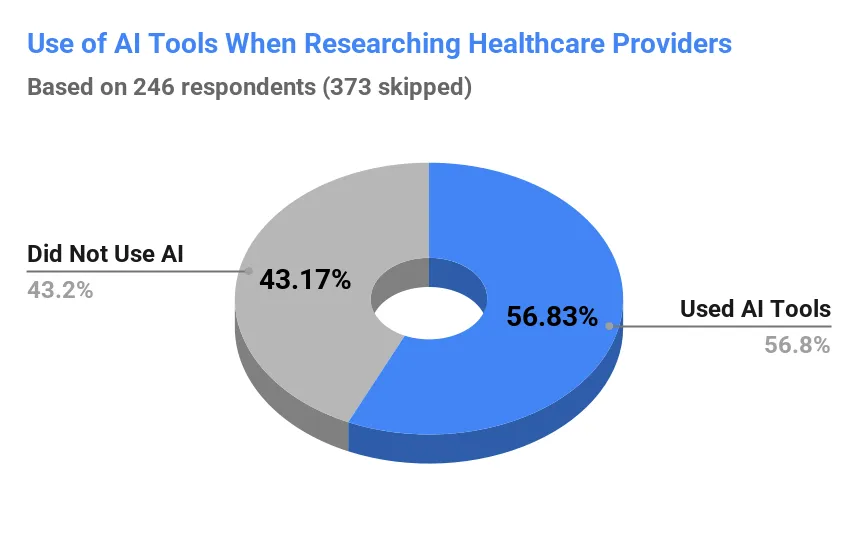
Among patients who use AI, 57% of their provider research is conducted through AI tools, showing that AI quickly becomes a primary resource once adopted. This deeper reliance suggests increasing comfort with AI-generated recommendations and summaries. As AI grows into a core part of the research experience, providers must improve structured data, listings, and profile accuracy so AI tools present reliable and up-to-date information.
Q4: What Patients Care About When Evaluating AI Results? (246 respondents)
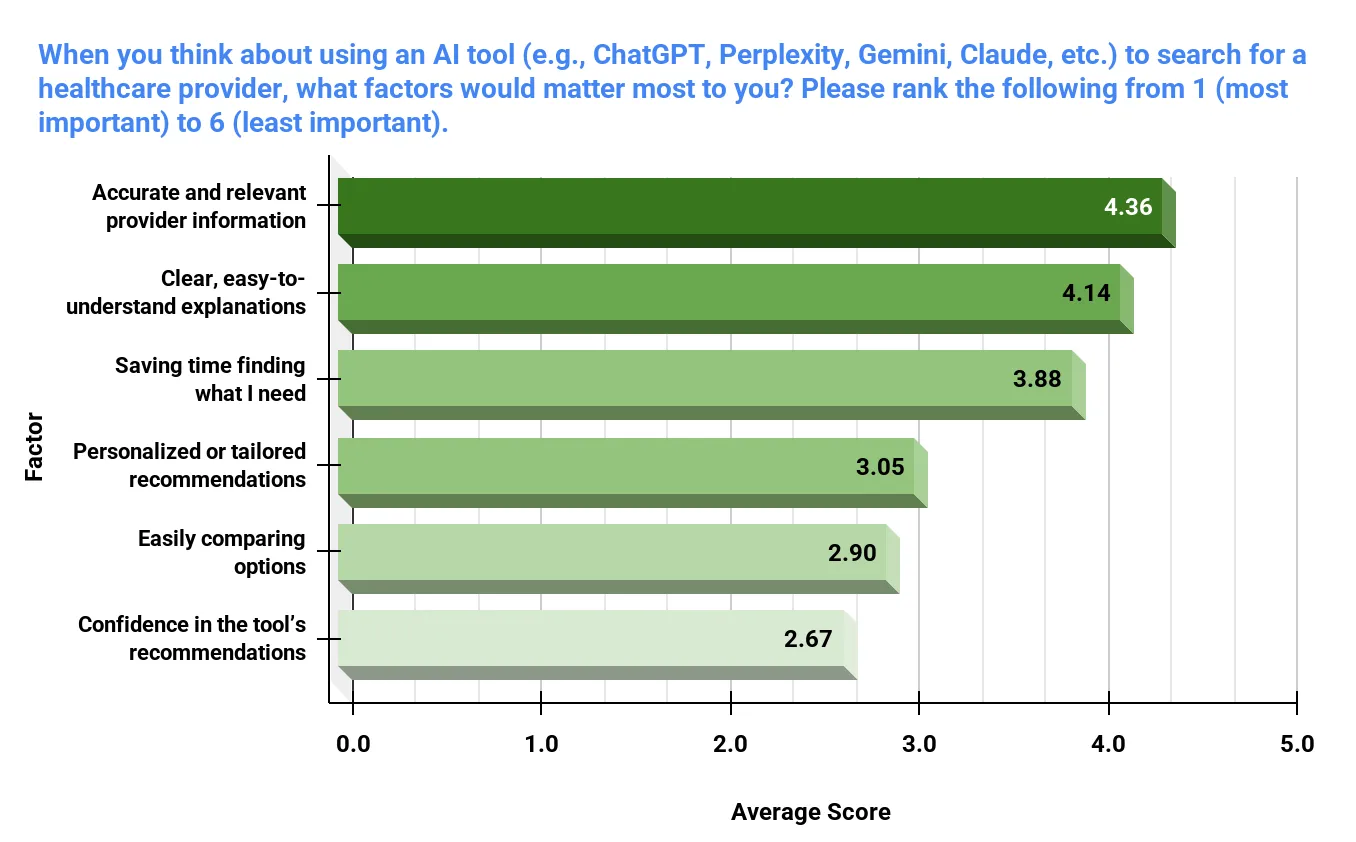
Accuracy (37.8%) and clarity (24.8%) are the most important factors patients look for when using AI tools to research healthcare providers. Patients care less about how the AI works and more about whether the information is correct and easy to understand. This makes trustworthy, well-organized information essential across provider websites, listings, and digital profiles. Providers who ensure clean, verifiable data help AI tools deliver the reliable experience patients expect.
Q5: How Much Patients Trust What AI Tells Them? (246 respondents)
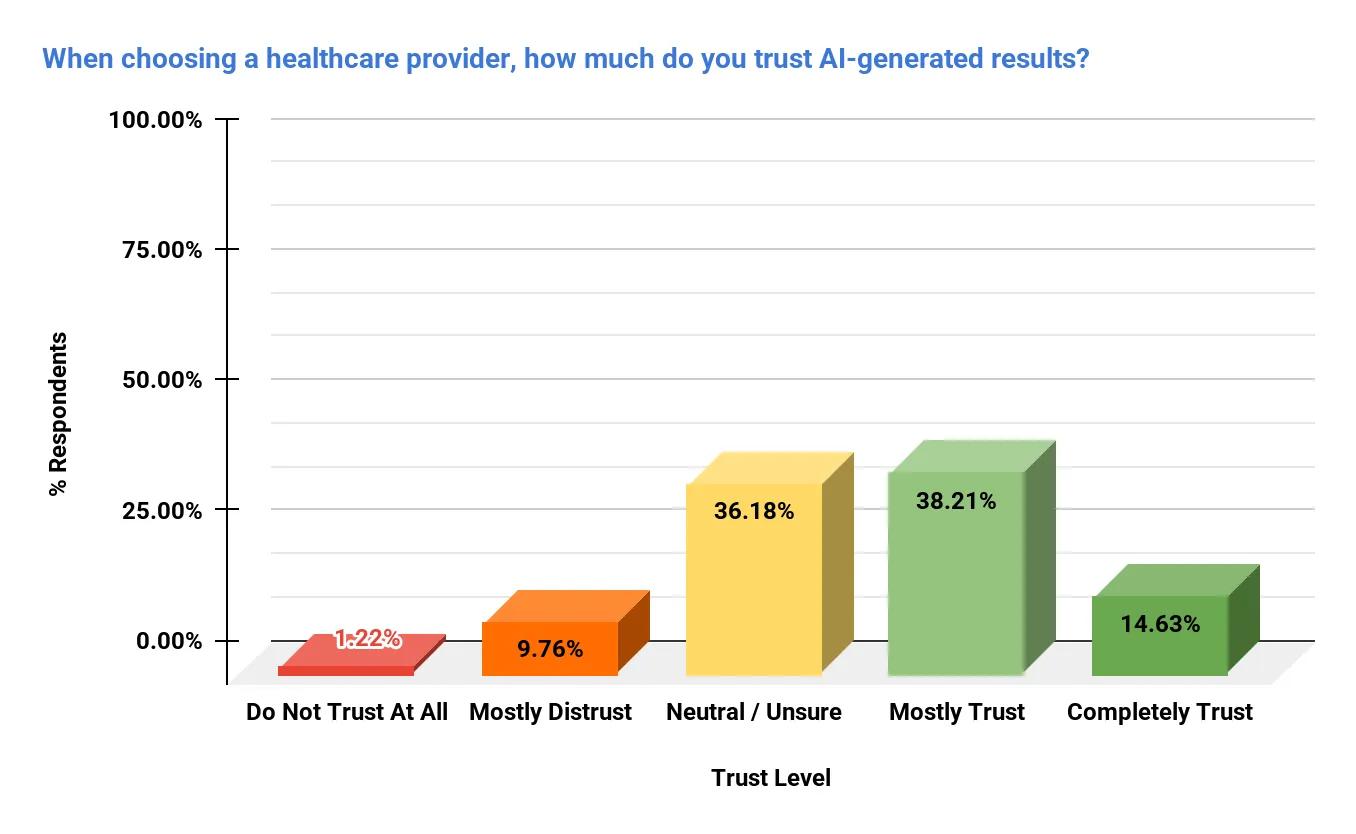
A majority of patients (52.8%) say they mostly or completely trust AI-generated results, though full confidence remains rare. About 36% maintain a neutral stance, using AI as a helpful guide rather than a final decision-maker. Only a small minority expresses distrust, showing that patients generally welcome AI as long as it delivers accurate and relevant information. Providers should maintain high-quality online data to reinforce this trust.
Q6: Do Patients Trust AI to Rank or Summarize Doctors? (246 respondents)
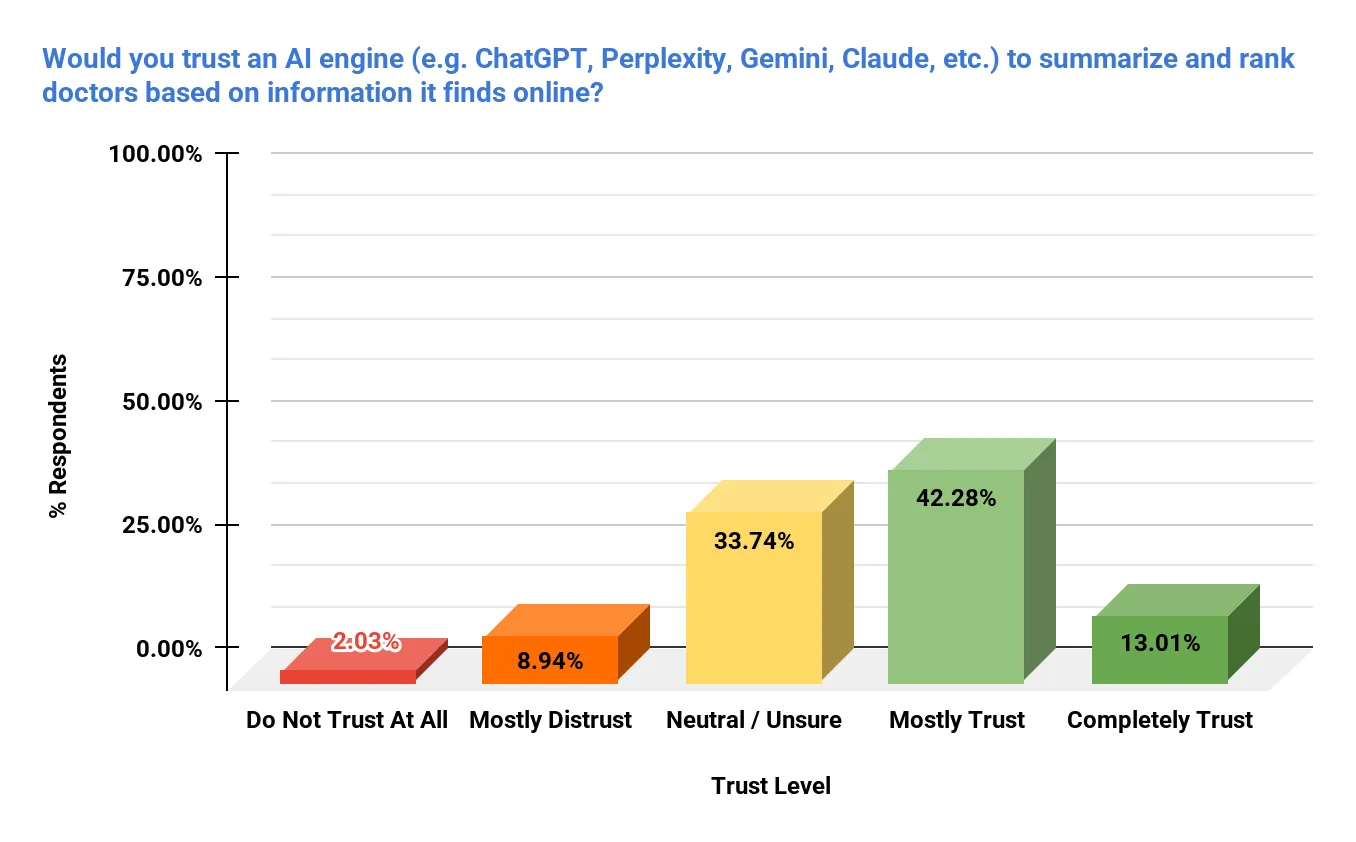
More than half of patients (55.3%) trust AI tools to summarize or rank healthcare providers, mirroring their trust in AI-generated search results overall. However, many still rely on independent reviews or personal research to confirm these rankings. Patients want AI to help guide decisions, not replace their judgment entirely. Providers benefit when their credentials, reviews, and profile details are complete and accurate, as these elements directly influence AI rankings.
Q7: What Makes Patients Trust an AI-Recommended Provider? (246 respondents)
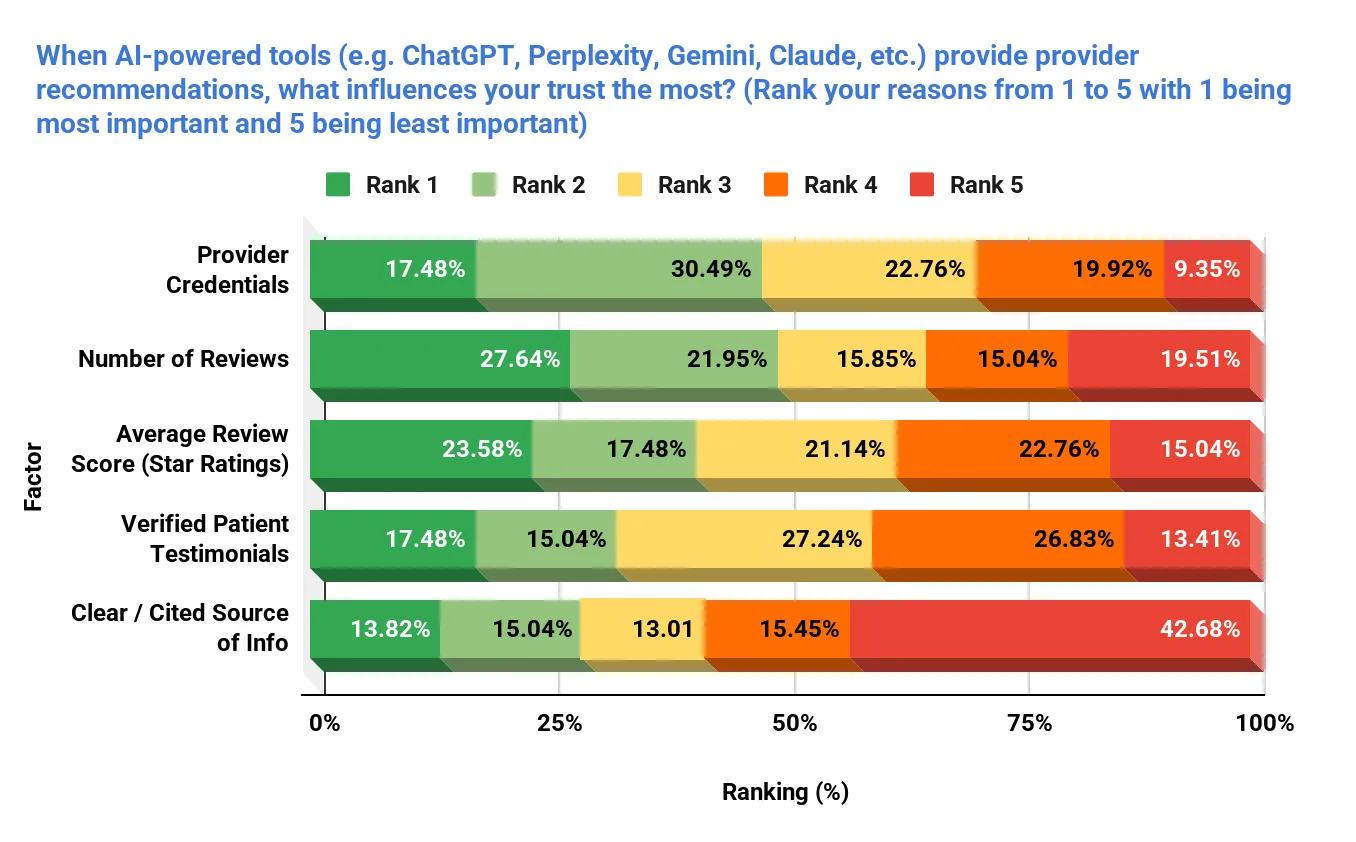
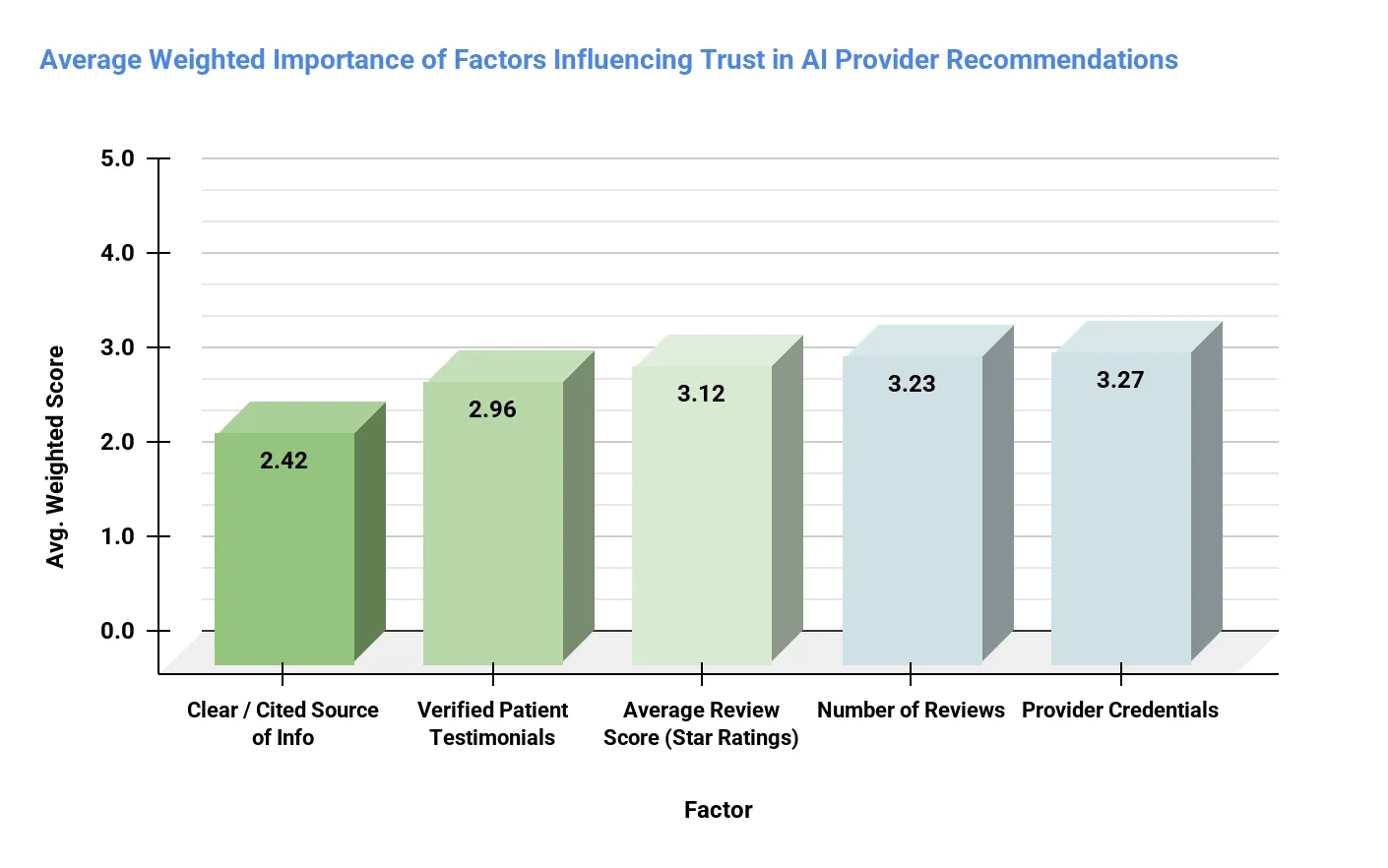
Mean Weighted Average Range: 2.42 - 3.27
Patients place the most trust in the transparency and source of the AI's information when evaluating AI-driven recommendations. The factor "Clear or Cited Source of Information" ranked highest in importance with the lowest weighted score of 2.42. This shows that patients rely heavily on knowing how the AI arrives at its suggestions.
Familiar, quantifiable indicators such as Provider Credentials (3.27), Number of Reviews (3.23), and Average Review Score (3.12) ranked significantly lower in importance. This suggests that while maintaining strong online reputation markers is helpful, patients prioritize the AI’s transparency over these traditional markers when deciding to trust an AI recommendation.
Q8: Is AI More Helpful Than Google? (534 respondents)
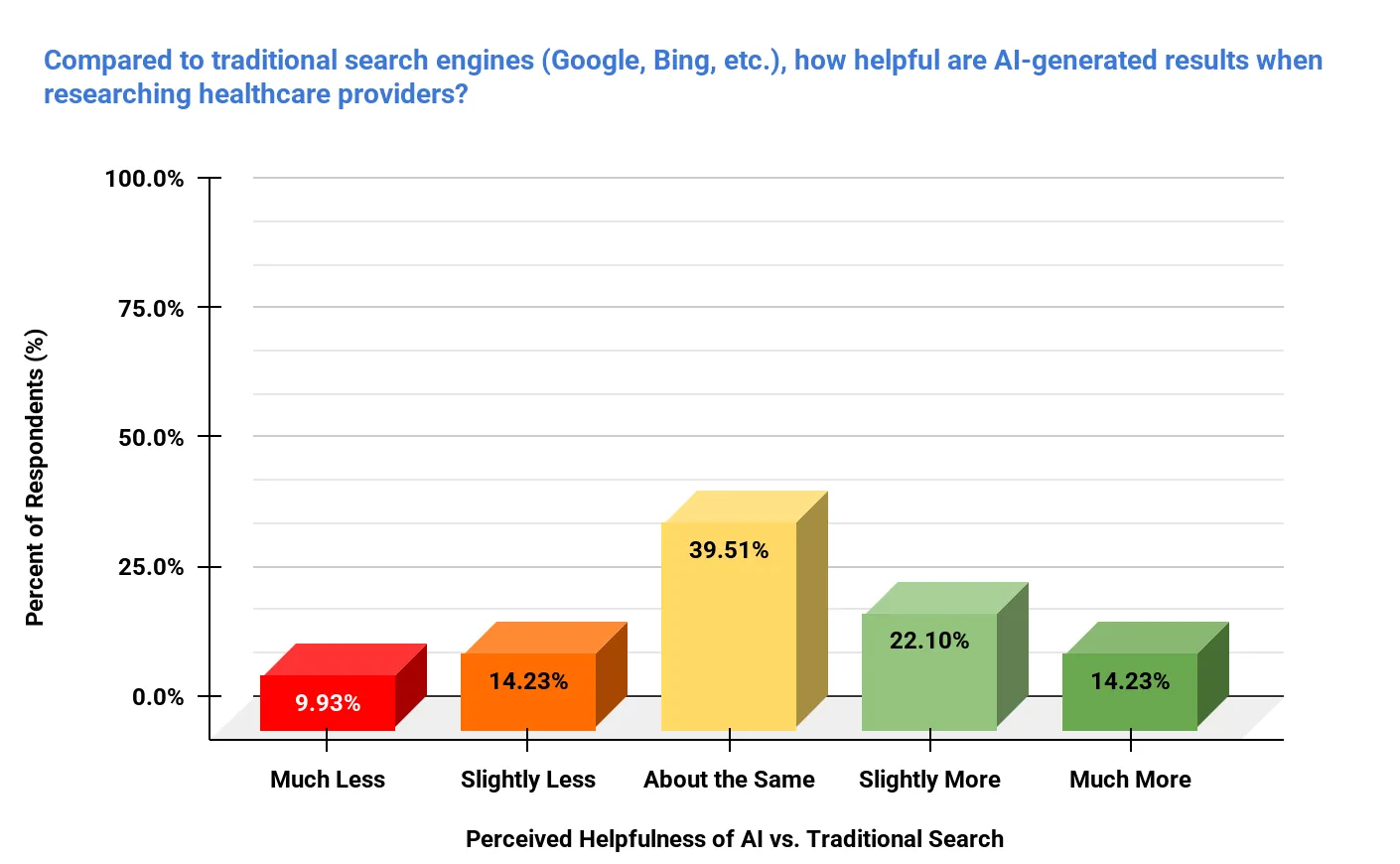
Nearly four in ten patients (36.3%) find AI tools more helpful than traditional search engines, while another 39.5% say both are equally helpful. Only 24% view AI as less helpful, indicating that AI is already approaching parity with Google in perceived usefulness. This balance suggests a future where AI and traditional search coexist as complementary research paths. Providers should ensure their information is structured and factual so AI systems can summarize and present it effectively.
Q9: Which Platforms Do Patients Rely on Most? (534 respondents)
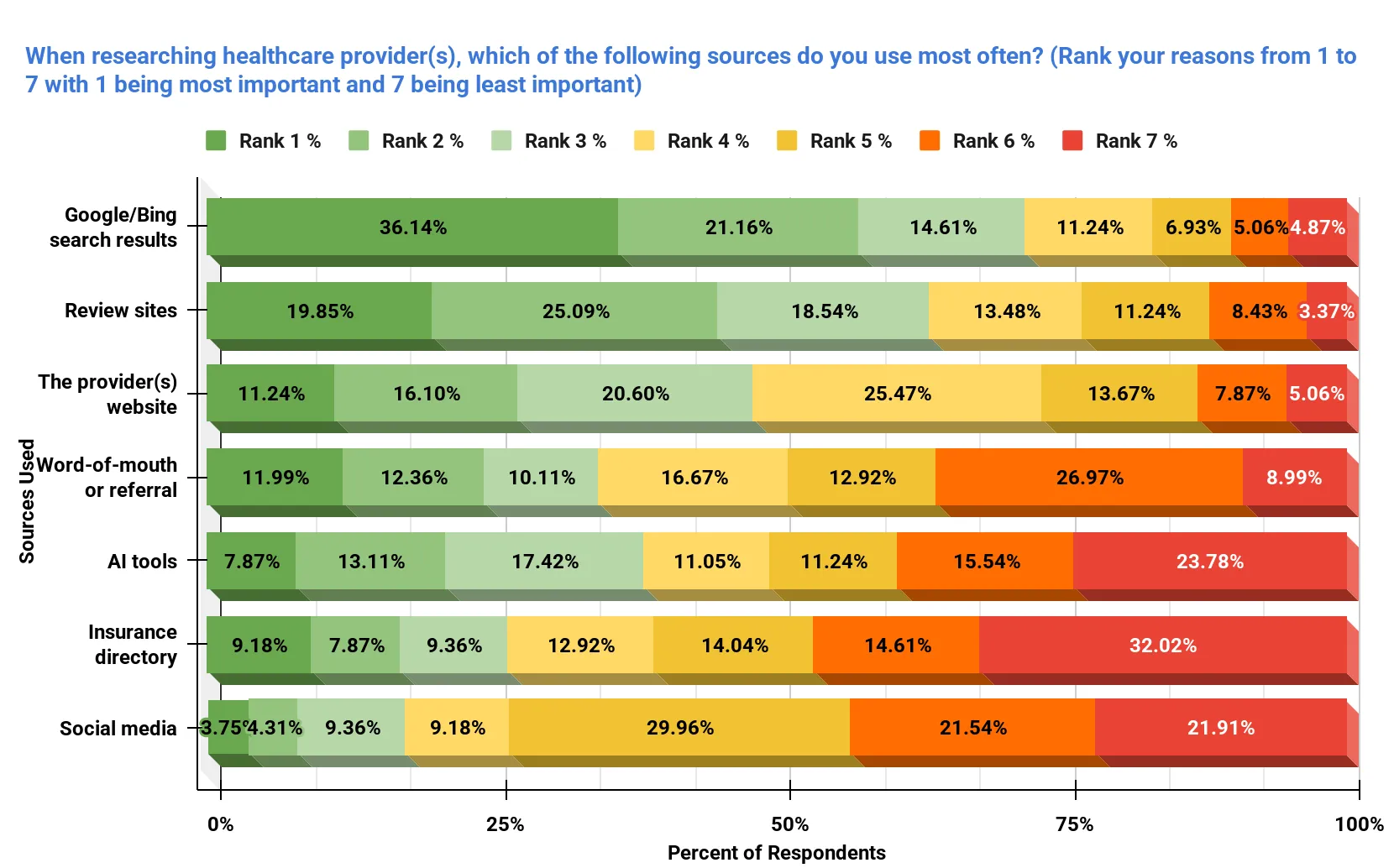
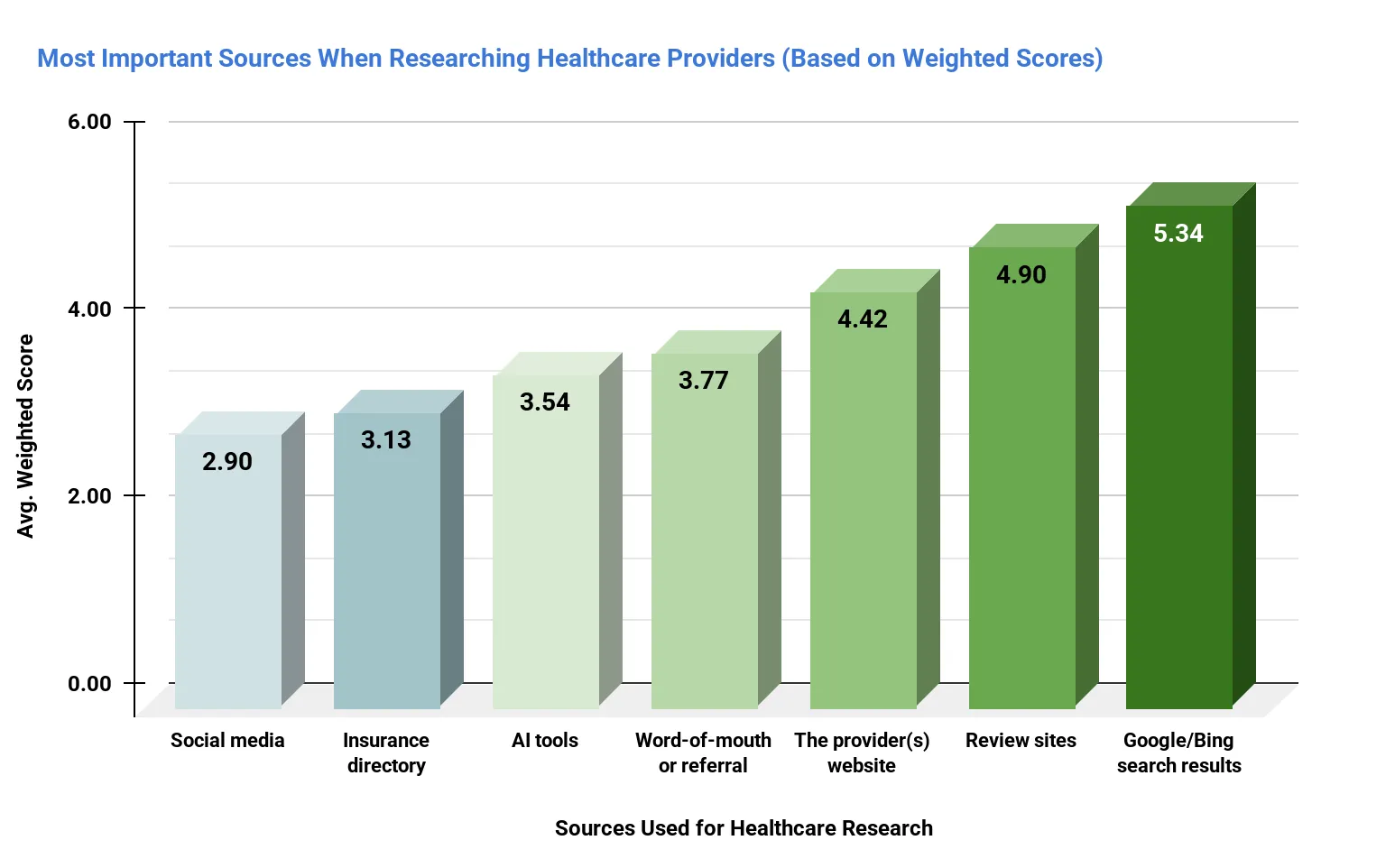
Weighted Average Range: 2.90 - 5.34
Google and review platforms remain the top sources for researching healthcare providers, earning the highest weighted positions (5.34 and 4.9). Provider websites also play an important role, while AI tools currently sit in a growing mid-tier position with a score of 3.5. This pattern shows that traditional digital channels still dominate the research journey, but AI is quickly gaining ground. Providers should strengthen their presence across all three pillars: search engines, review platforms, and AI tools.
Q10: Will Patients Use AI More in the Future? (534 respondents)
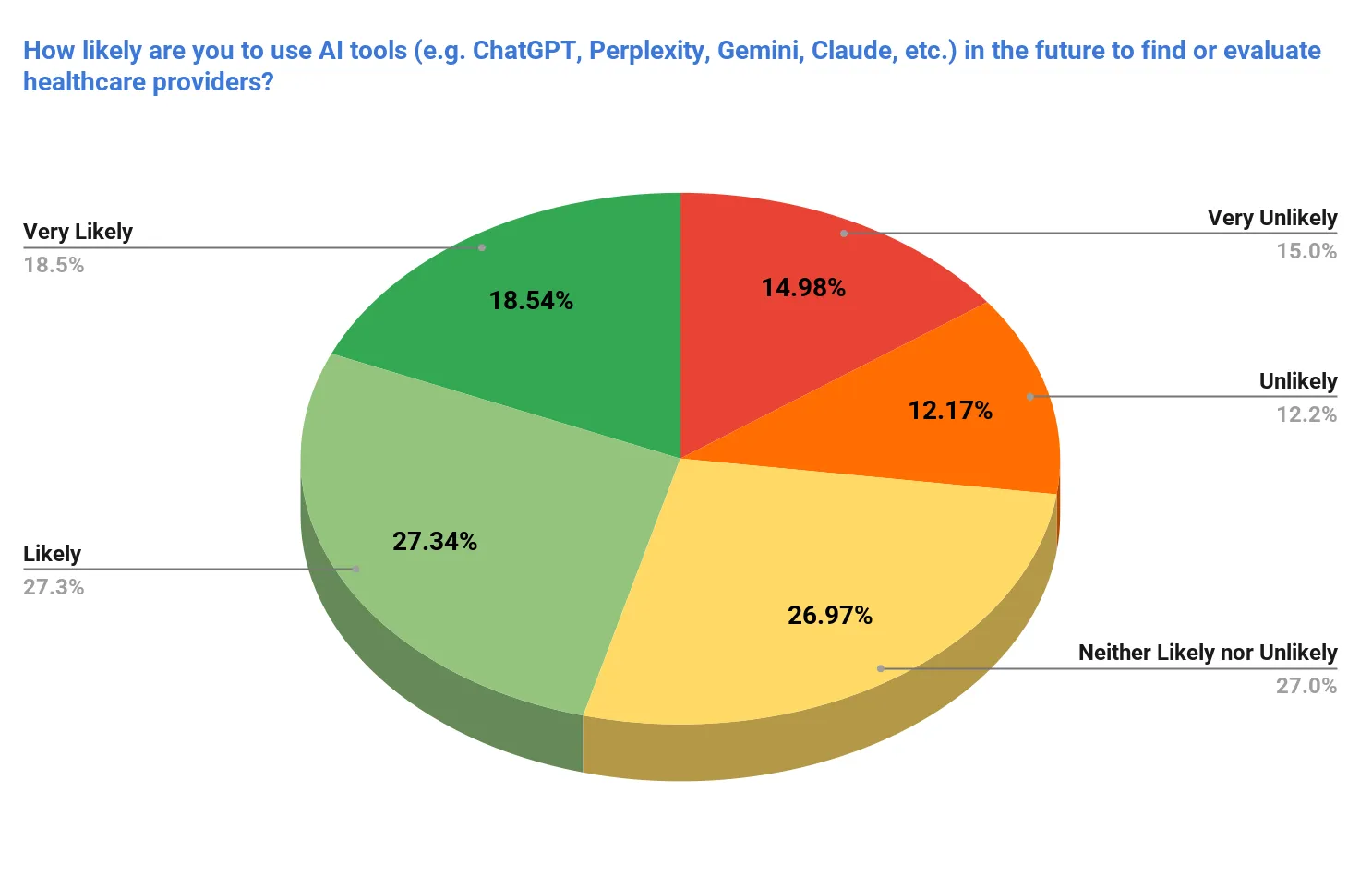
Almost half of patients (45.9%) are likely or very likely to use AI for future provider research, indicating strong upward momentum. About 27% remain undecided, while another 27% say they are unlikely to use AI, showing that comfort levels vary across segments. The overall weighted score of 3.22 reflects a moderate but growing readiness to adopt AI-assisted healthcare decision-making. Providers who optimize for AI visibility now will be better positioned as usage continues to rise.
Q11: Demographic Analysis of Patient AI Usage in Healthcare Provider Searches (Age, Device, Gender, Income, Region)
(A) How Different Age Segments Use AI for Provider Searches? (619 respondents)
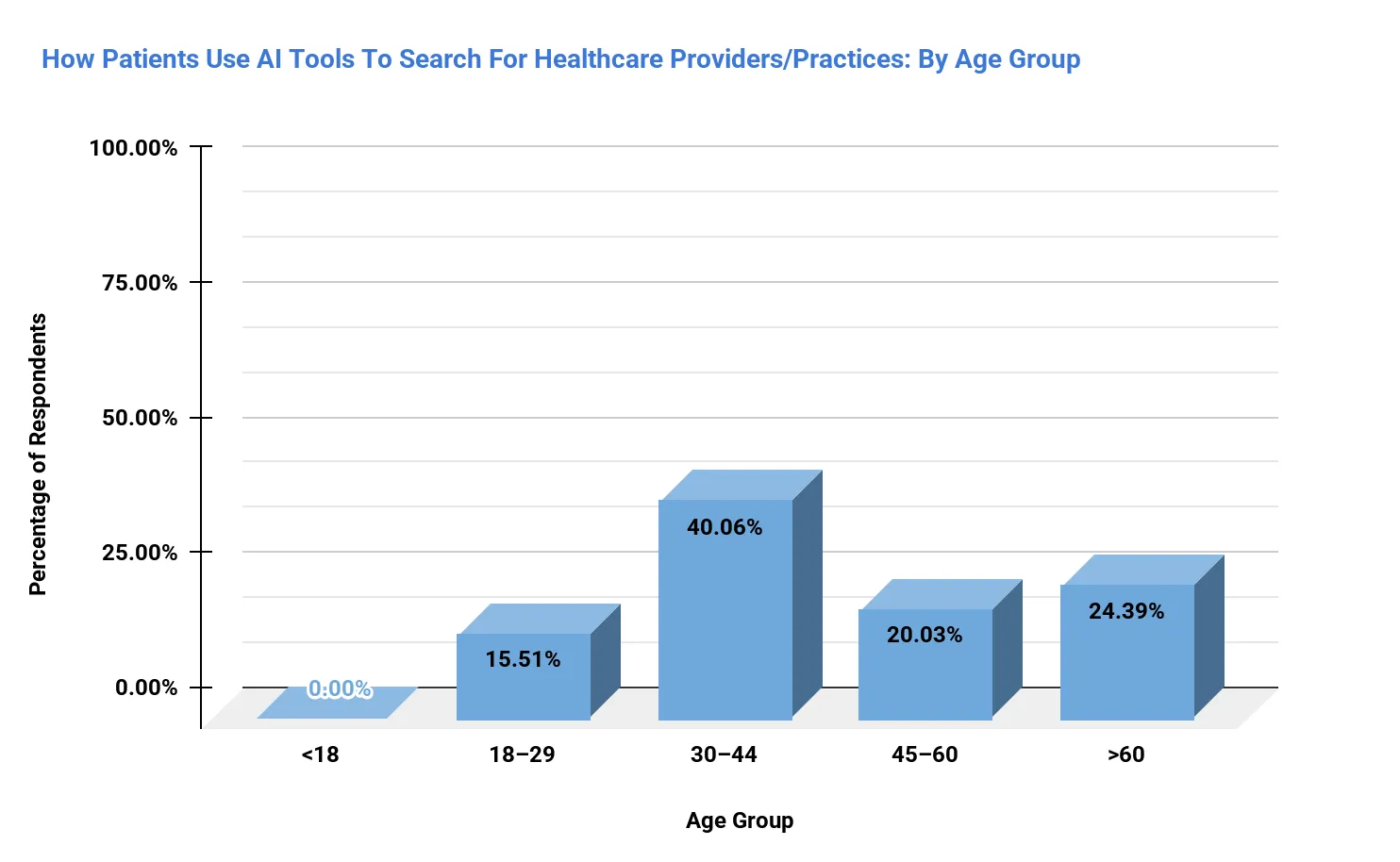
AI healthcare search usage is highest among adults aged 30–44 (40%), who remain the most active and engaged group when researching providers online. Older adults show meaningful usage as well, with 24% of AI users over age 60, demonstrating that AI adoption is no longer limited to younger, tech-native groups.
Ages 18–44 collectively account for more than half of all AI usage (55.6%), while patients under 18 show no measurable participation. Providers should focus AI-optimized content on the 30–44 age group while ensuring simpler, clearer digital experiences for older patients who are increasingly turning to AI for healthcare decisions.
(B) How Men and Women Differ in AI Usage? (619 respondents)
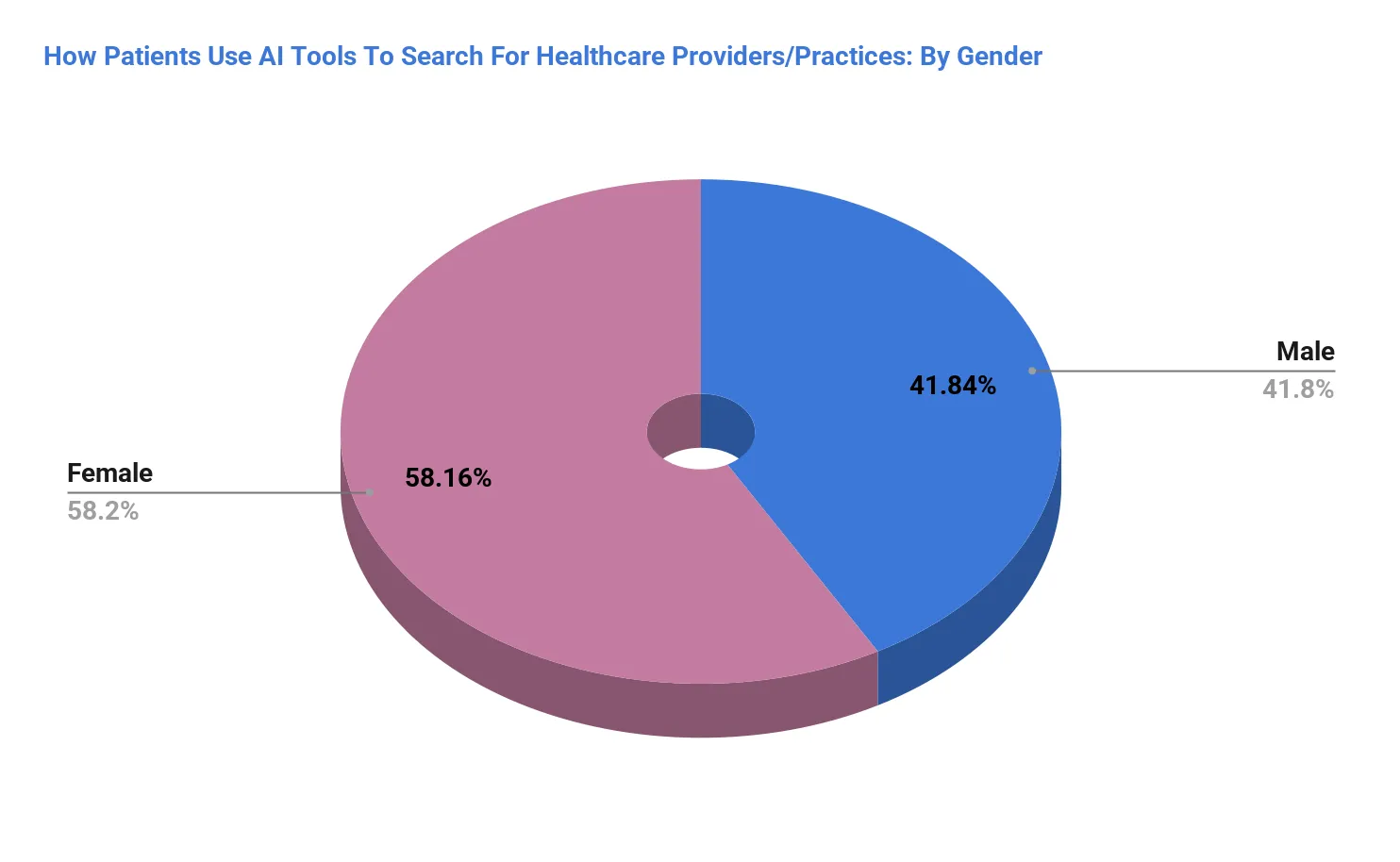
Women represent the majority of AI healthcare search users (58%), reinforcing their dominant role as primary healthcare decision-makers in households. Men account for 42% of usage, showing strong engagement but leaving room for additional growth.
The lack of non-binary representation may indicate sampling limitations or low participation. Providers should design AI-driven communication that supports the informational and emotional needs of female healthcare decision-makers while continuing to build trust and relevance for male users.
(C) How Income Levels Influence AI Adoption? (619 respondents)
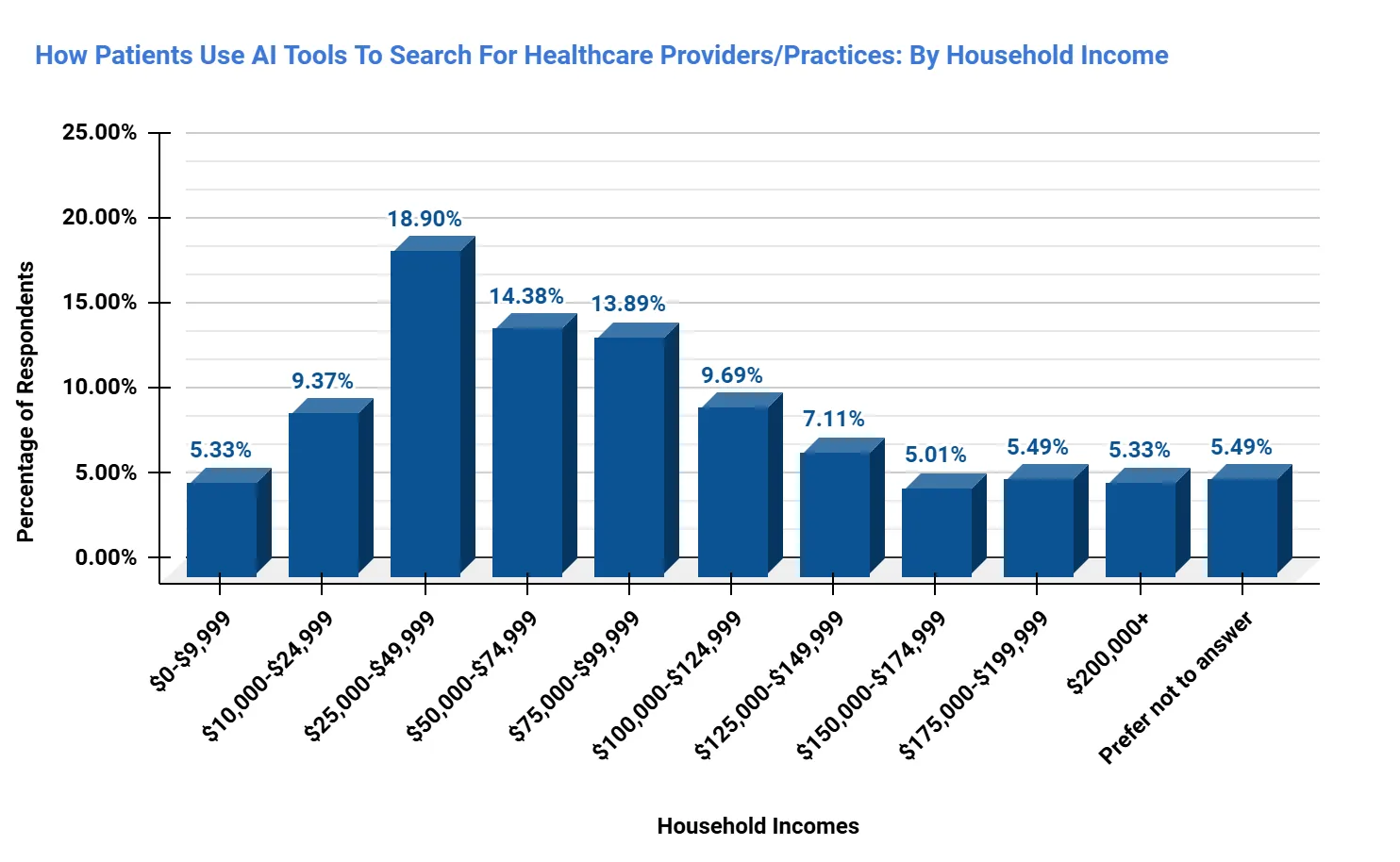
Middle-income households ($25K–$99K) form the largest share of AI healthcare search users (47%), showing that AI tools have become mainstream among cost-conscious but digitally comfortable patients. Higher-income households (> $125K) represent only about 23% of usage, possibly due to stronger reliance on referrals or established provider networks.
Lower-income groups (< $25K) account for roughly 15%, reflecting AI’s accessibility and the expanding reach of mobile-based platforms. Providers should emphasize clarity, value, and trust in their online presence to appeal to middle-income users while highlighting privacy and credibility for higher-income segments.
(D) Where AI Adoption Is Highest Across the U.S.? (608 respondents)
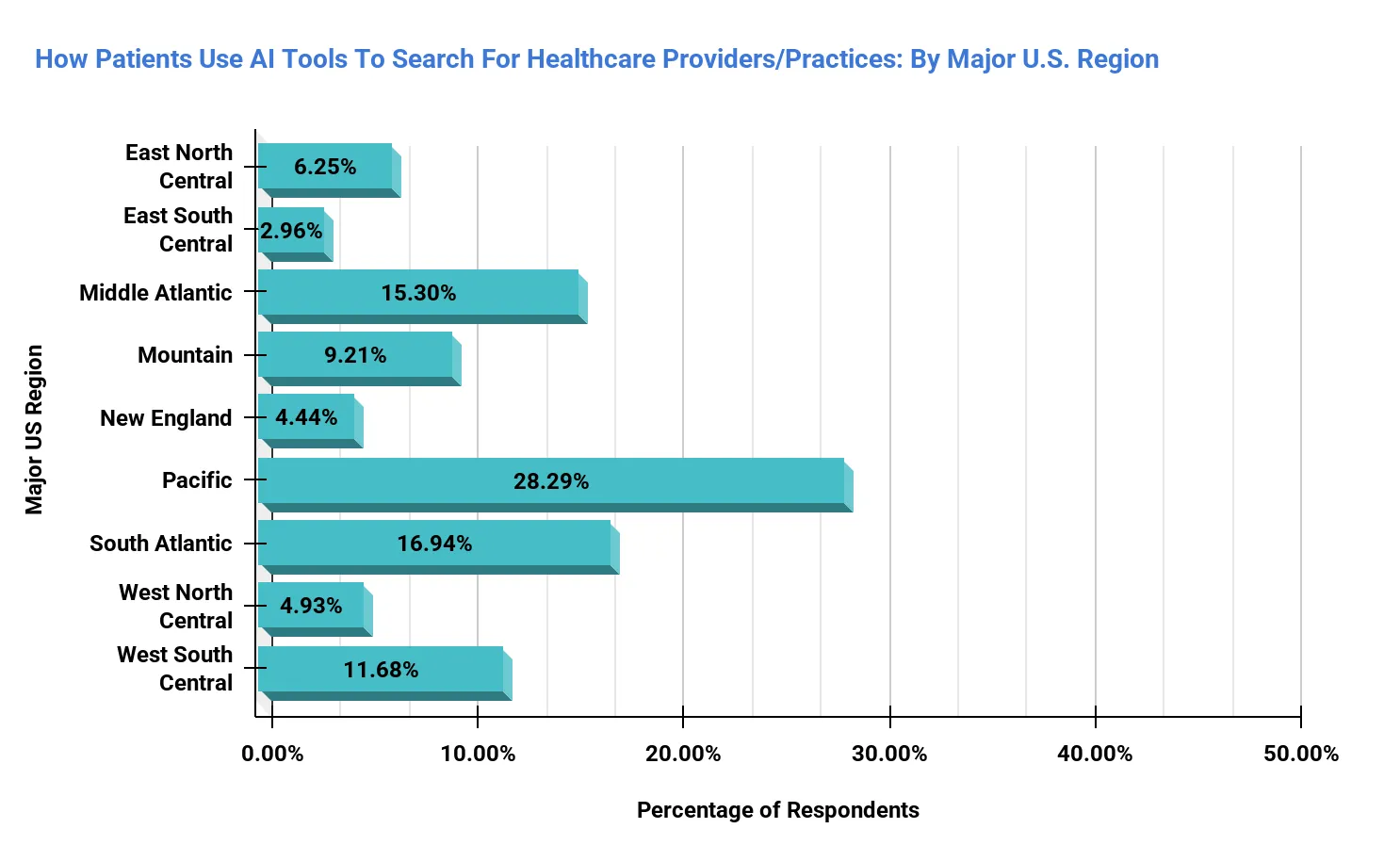
AI usage is most concentrated in the Pacific region (28%) and the South Atlantic (17%), showing strong engagement in highly urban, tech-oriented markets. The Mid-Atlantic also plays a significant role (15%), while central U.S. regions show lower adoption (around 11%), likely influenced by geographic and digital access differences. Southern regions show moderate adoption levels at about 15%. Providers should prioritize AI search readiness in coastal regions where usage is strongest, while focusing on patient education and digital access strategies to boost adoption in central and southern states.
Conclusion
Findings from this nationwide survey of 619 respondents reveal a clear digital shift in how patients research healthcare providers. AI is now an expected complement, not a replacement, for traditional methods. Trust, transparency, and accuracy remain the foundation of patient confidence.
- 51% have adopted AI or internet-based tools.
- 46.5% still use traditional search, while 25% use both.
- AI usage share: 56.8% of total searches among adopters.
- Trust: 53-55% “mostly/completely trust” AI outputs.
- Helpfulness: 36% find AI more helpful; 39% equal to traditional.
- Demographics: 30-44 years (40%), female (58%), Pacific region (28%), 96% mobile usage.
Strengthen Your Digital Trust with RepuGen
As patients increasingly rely on AI tools to discover and evaluate healthcare providers, trust and data accuracy have become the new currency of digital reputation.
RepuGen empowers healthcare organizations to:
- Enhance reputation with verified patient reviews that improve visibility in AI and traditional search.
- Maintain data consistency across Google, directories, and review platforms to ensure AI pulls accurate information.
- Monitor patient sentiment and respond quickly to build credibility.
- Improve discoverability across both AI-powered tools and search engines through structured, reputation-driven data.
Partner with RepuGen to build a smarter, more trusted digital reputation that aligns with how patients now search, decide, and share their experiences.
 2026 Study
Reputation, Reviews & Patient Acquisition: A 2026 Healthcare Behavioral Study
Read Now
2026 Study
Reputation, Reviews & Patient Acquisition: A 2026 Healthcare Behavioral Study
Read Now
 Demographics
Choosing a Healthcare Provider in the US: What Demographics Reveal About Patients’ Decision-Making
Read Now
Demographics
Choosing a Healthcare Provider in the US: What Demographics Reveal About Patients’ Decision-Making
Read Now
 By Specialty
What Matters Most: Patient Satisfaction Drivers Across the Top 10 U.S. Healthcare Specialties
Read Now
By Specialty
What Matters Most: Patient Satisfaction Drivers Across the Top 10 U.S. Healthcare Specialties
Read Now
 Reputation
How Your Online Reputation Affects Patient Selection of Doctors
Read Now
Reputation
How Your Online Reputation Affects Patient Selection of Doctors
Read Now